





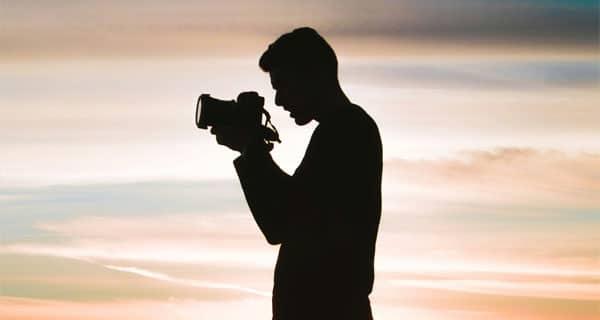

Behind every beautiful sunset shot is a creator with legal rights – photographers automatically own copyright in their images, even if the subject never agreed to be in the frame.
Behind every beautiful sunset shot is a creator with legal rights – photographers automatically own copyright in their images, even if the subject never agreed to be in the frame.
The Curious Life of a Photograph
A photograph seems harmless enough. Someone presses a button, a moment is frozen, and life goes on.
Except it often doesn’t.
That innocent image can end up on Instagram, in a marketing campaign, inside an AI training dataset, on a billboard, in a courtroom or at the centre of an angry email exchange between lawyers charging by the hour.
The law has an almost uncanny ability to turn ordinary photographs into complicated legal creatures. A single image may involve copyright ownership, privacy rights, consumer protection laws, defamation risks and questions about consent. Add social media and artificial intelligence and things become even stranger.
The lesson? Before posting a photograph online, it is worth asking not only “Can I use this image?” but also “What assumptions might other people make when they see it?” In law, that difference can matter more than the photograph itself.

These people may look happy in a public place – but most of the time they have no idea their image could be captured, shared or used in ways they never agreed to.
There was a time when photography law seemed relatively simple.
If you were standing in a public place, camera in hand, you could generally take photographs of what you could see.
Today, however, photography sits at the intersection of copyright law, privacy law, surveillance laws, consumer protection law, social media, artificial intelligence and reputation management. A single image can be uploaded, shared, copied, manipulated, commercialised and distributed globally within minutes.
So what are the rules in Australia in 2026?
The answer is that photography in public is still generally lawful, but there are now more legal risks than ever before.
Can You Photograph People in Public?
The starting point remains that, in Australia, there is generally no broad prohibition on photographing people who are in public places.
If someone is walking down a street, sitting in a park, attending a festival or enjoying a day at the beach, they usually do not have a legal right to prevent another person from taking their photograph merely because they do not like it.
This often surprises people.
Many Australians assume there is a general “right to privacy” that stops photographs being taken without permission. Historically, that has not been the case.
However, that does not mean there are no legal risks.
The law becomes much more complicated when photographs are published, used commercially, manipulated, used by businesses or taken in circumstances where privacy is expected.
Fun Fact
Did you know that in Australia it can sometimes be easier to photograph a stranger on a public street than to photograph inside a shopping centre?
That’s because shopping centres are private property and can impose conditions on photography, while public streets are generally open to the public.
Australia’s New Privacy Tort Changes the Landscape
One of the most significant legal developments is the introduction of Australia’s new statutory tort for serious invasions of privacy under the Privacy and Other Legislation Amendment Act 2024 (Cth).
Historically, Australia did not recognise a general cause of action for invasion of privacy, although courts had hinted that one might eventually emerge. For example, in Australian Broadcasting Corporation v Lenah Game Meats Pty Ltd (2001) 208 CLR 199, the High Court left open the possibility that privacy rights might develop through the common law.
The law has now moved considerably further.
The new privacy tort allows individuals to bring legal proceedings where there has been a serious invasion of privacy and the public interest does not outweigh the privacy interest.
This means that while taking a photograph in a public place may still be lawful, publishing, exploiting or sharing that image could potentially create legal risks in circumstances where a person’s privacy has been seriously invaded.
The law is still developing, and courts will determine its boundaries over time.
Social Media Has Changed Everything
Twenty years ago, a photograph might have appeared in a family album or local newspaper.
Today, it may appear on Instagram, TikTok, Facebook, LinkedIn, X, YouTube or an AI-generated marketing campaign.
The speed and scale of publication can significantly increase legal exposure.
A photograph that might seem harmless when taken can create legal problems when:
- it identifies someone in a sensitive situation;
- it is used to promote a business;
- it implies endorsement;
- it is accompanied by defamatory comments;
- it is manipulated using artificial intelligence tools; or
- it is shared widely without context.
The legal question is often not whether the photograph was taken lawfully, but whether it was later used lawfully.
Using Someone’s Image for Advertising Can Be Risky
A common misconception is that if a photograph is publicly available online, it can be freely used in marketing.
That is incorrect.
Even where copyright ownership has been dealt with, businesses must consider the Australian Consumer Law contained in Schedule 2 of the Competition and Consumer Act 2010 (Cth).
Section 18 prohibits misleading or deceptive conduct.
Section 29 prohibits false or misleading representations, including representations suggesting sponsorship, approval or affiliation.
For example, if a cosmetic clinic, gym, restaurant or clothing brand uses an identifiable person’s photograph in advertising, consumers may assume that person has endorsed or used the business.
If no such relationship exists, legal issues may arise.
Fun Fact
A photograph can trigger copyright law, privacy law, defamation law, consumer law and contract law all at the same time.
Lawyers sometimes describe photographs as “legal Swiss Army knives” because so many different legal rights can attach to a single image.
Who Owns the Copyright?
Many people confuse copyright ownership with image rights.
They are different things.
Under the Copyright Act 1968 (Cth), copyright generally belongs to the photographer who created the image.
That copyright arises automatically.
No registration is required.
The copyright owner generally has the exclusive right to reproduce, publish, communicate and license the photograph.
This means that even if your face appears in a photograph, you may not own the copyright.
The photographer often does.
As a result, disputes about photographs frequently involve both copyright issues and privacy or consumer law issues.
The Girl Who Accidentally Became an Advertisement
One of the most famous examples of this issue involved a teenage girl whose photograph was uploaded to Flickr and later found its way into a commercial advertising campaign for Virgin Mobile Australia.
The image had originally been posted online under a Creative Commons licence by the photographer. Believing it had the right to use the image, Virgin Mobile incorporated the teenager’s photograph into advertisements featuring promotional slogans.
The problem? While the photographer may have granted permission to use the photograph, nobody had obtained permission from the girl whose face appeared in it.
The dispute generated international headlines and highlighted a legal lesson that many businesses still overlook today: owning the copyright in a photograph is not necessarily the same thing as having the right to use a person’s image to promote products or services.
The issue continues to arise in modern marketing. According to media reports and industry commentary, disputes frequently emerge where businesses use photographs of ordinary people in advertising, social media campaigns or “before and after” promotions. Cosmetic clinics, wellness providers and fitness businesses in particular need to exercise caution when using images that could suggest a person has received treatment, achieved certain results or endorsed a service when this may not be the case.
In an era of social media, user-generated content and AI-powered marketing, a photograph found online may appear free for the taking. Legally, however, things are rarely that simple.
What About AI and Deepfakes?
Artificial intelligence has created entirely new concerns.
Images can now be altered, enhanced, manipulated or generated without the knowledge of the person depicted.
A photograph taken in a public place can potentially be used to create:
- AI-generated endorsements;
- deepfake videos;
- synthetic advertising campaigns;
- manipulated political content; or
- misleading social media posts.
While Australian law is still catching up with these technologies, businesses should be particularly careful before using AI-generated content that incorporates real people.
Consumer law, privacy law, copyright law and defamation law may all become relevant.
Public Incidents Reported in the Media
Recent media reports have highlighted increasing public concern about privacy and photography.
According to media reports, disputes have arisen involving influencers filming members of the public without consent, content creators recording people in gyms, and social media personalities confronting strangers while live-streaming.
Many of these incidents never reach court.
Nevertheless, they demonstrate growing public sensitivity about photography, filming and online publication.
Similarly, media reports concerning the sharing of images captured at sporting events, schools and public gatherings have reignited debate about where the balance should sit between freedom of expression and personal privacy.
As privacy laws continue to evolve, these issues are likely to receive greater judicial attention.
Public Places Are Not Always Public
Another trap for photographers is assuming that every publicly accessible place is legally a public place.
Shopping centres, sporting venues, universities, museums, galleries and entertainment venues are often privately owned.
They may impose conditions restricting photography.
Likewise, special restrictions can apply to:
- defence installations;
- courts;
- prisons;
- airports;
- certain transport infrastructure;
- Commonwealth reserves; and
- culturally sensitive locations.
Always check local rules before commencing a commercial shoot.
Photographing Children
There is no universal law prohibiting the photographing of children in public places.
However, schools, sporting clubs, childcare centres and event organisers often impose their own policies.
Commercial use of children’s images carries additional risk.
Obtaining written parental consent is generally advisable.
The Bottom Line
Photography remains one of the most powerful forms of communication.
Yet the legal environment surrounding photography has become significantly more complex.
The key point is this: taking the photograph is often only the beginning of the legal analysis.
Questions about copyright ownership, privacy rights, misleading conduct, AI manipulation, defamation, commercial endorsements and publication all need to be considered.
As Australia’s new privacy tort develops and technology continues to evolve, photographers, businesses, influencers and content creators should assume that the legal risks associated with images will only continue to grow.
The safest approach remains the same as it has always been: know the rules, obtain permission where appropriate, and think carefully before publishing.
Quick Legal Checklist Before You Press “Post”
Before publishing a photograph online, ask yourself:
- Do I own the copyright or have permission to use the image?
- Could this imply endorsement by the person shown?
- Could the image be misleading or deceptive?
- Does the image reveal private or sensitive information?
- Have I obtained consent where appropriate?
- Could publication expose me to defamation or privacy claims?
If in doubt, seek legal advice before clicking upload.
Further Reading
“Laws of Photography in Public Spaces” – Australian Photography
https://sharongivoni.com.au/laws-of-photography-in-public-spaces/
“How does Copyright Law work with AI?” – Sharon Givoni Consulting
https://sharongivoni.com.au/protecting-your-creativity-why-copyright-matters-for-australian-creators/
“What Australia’s New Privacy Tort Means for Marketers, Advertisers and Photographers” – Sharon Givoni Consulting
https://sharongivoni.com.au/how-austaralias-new-privacy-tort-affects-marketers-advertisers-and-photographers/
“What Australia’s New Privacy Law Means for Artists” – frankie magazine
https://www.frankie.com.au/article/what-australias-new-privacy-law-means-for-artists-618102
“Photos and videos” – Office of the Australian Information Commissioner (OAIC)
https://www.oaic.gov.au/privacy/your-privacy-rights/social-media-and-online-privacy/photos-and-videos
“Photographing and filming children” – Government of Western Australia (Department of Local Government, Sport and Cultural Industries)
https://www.cits.wa.gov.au/department/publications/publication/photographing-and-filming-children
Please note the above article is general in nature and does not constitute legal advice.
Please email us info@iplegal.com.au if you need legal advice about your brand or another legal matter in this area generally.