





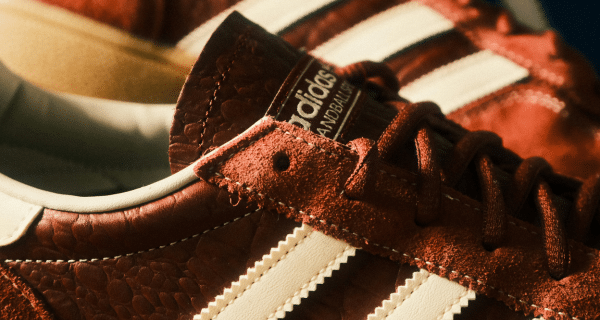

Photo by Niklas Bahe from Unsplash
Learn about protecting your trade marks
Stripes, Spots and Squiggles: Can You Really Own a Colour, Shape or Pattern?
Three stripes on a shoe. Four stripes on tracksuit pants. A purple chocolate wrapper. A red shoe sole. Each raises the same legal question: when does a simple colour, shape or pattern become something a business can protect as a trade mark?
The question has gained new attention following Federal Court proceedings by Adidas against Australian fashion retailer White Fox over clothing featuring four parallel stripes. The dispute is a reminder that changing a design slightly does not necessarily avoid infringement. Equally, a famous registered trade mark does not give its owner a monopoly over every similar decorative feature.
WHO DOES THIS APPLY TO?
This article is relevant to businesses in fashion, footwear, cosmetics, food and beverages, packaging, retail and e-commerce, as well as designers, marketing agencies and private-label manufacturers.
What can be a trade mark?
A trade mark is a sign used, or intended to be used, to distinguish one trader’s goods or services from those of others: Trade Marks Act 1995 (Cth) (Act) s 17. A “sign” is defined broadly in s 6 to include shapes, colours, aspects of packaging, sounds and scents, alone or in combination.
To be registered, a mark must be capable of distinguishing the applicant’s goods or services: s 41. A central question is whether other traders would legitimately want to use the sign in connection with their own goods: Cantarella Bros Pty Ltd v Modena Trading Pty Ltd (2014) 254 CLR 337; [2014] HCA 48. Ordinary stripes, basic shapes and common colours will often struggle to meet that test without evidence that consumers have come to associate them with one trader.
Once registered, the owner has the exclusive right to use the mark, and to authorise others to use it, for the registered goods and services: s 20. A registered trade mark is personal property that can be assigned or licensed: s 21.
Adidas v White Fox
Adidas’s Australian portfolio includes long-standing three-stripe registrations. In earlier proceedings, Adidas relied on Trade Mark No. 131325, dating from 1957, and Trade Mark No. 924921, dating from 2002.
In Adidas Australia & Anor v White Fox, Adidas alleges that since at least March, White Fox has been selling and advertising clothes with four parallel stripes of equal width, and that the designs are “substantially identical with or otherwise deceptively similar” to its marks. The claim extends to advertising: Adidas argues that White Fox’s advertisements for its four-striped clothes and White Fox-branded socks feature people wearing genuine Adidas items, and its lawyers told the court that White Fox had the “intention to trade off our reputation”. Adidas sues Australian label White Fox over four stripes design
White Fox disputes the claim. It has not yet lodged a formal defence, but its lawyers told Justice Ian Jackman that it intends to argue that other prominent Australian brands such as Cotton On, Sportscraft and Glassons sell clothes with “similar decorative stripes”. Its barrister said White Fox would argue that the four stripes on its clothing were simply decorative rather than a trade mark. A three- to four-day trial is expected early next year. Adidas sues Australian label White Fox over four stripes design
What must Adidas establish?
Under s 120(1), a person infringes a registered trade mark if they use as a trade mark a sign that is substantially identical with or deceptively similar to the registered mark, in relation to the goods or services for which it is registered. Two questions arise.
First, is the sign being used as a trade mark? The question is whether the sign is used as a “badge of origin”, indicating a connection between the goods and the trader: Shell Co of Australia Ltd v Esso Standard Oil (Australia) Ltd (1963) 109 CLR 407. In Self Care IP Holdings Pty Ltd v Allergan Australia Pty Ltd [2023] HCA 8, the High Court said the correct approach is to ask whether the sign used indicates origin of goods in the user of the sign. Applying that test, the Court held that Self Care did not use “instant Botox® alternative” as a trade mark, so the question of deceptive similarity under s 120(1) did not arise. This is the battleground White Fox has signalled.
Second, is the sign deceptively similar? A mark is deceptively similar if it so nearly resembles the registered mark that it is likely to deceive or cause confusion: s 10. It is enough that there is a real, tangible danger of confusion, including where people are caused to wonder whether the goods come from the same source: Southern Cross Refrigerating Co v Toowoomba Foundry Pty Ltd (1954) 91 CLR 592. The notional buyer’s imperfect recollection of the registered mark lies at the centre of the test.
Importantly, in Self Care the High Court unanimously clarified that reputation is not a relevant consideration under s 120(1). The fame of the three stripes may therefore matter less to the infringement claim than many assume. Reputation remains relevant elsewhere, including infringement of a “well known” mark under s 120(3), and in claims under the Australian Consumer Law and passing off.
Adidas has won before
In Adidas AG v Pacific Brands Footwear Pty Ltd (No 3) [2013] FCA 905, Robertson J found that certain four-stripe footwear designs infringed Adidas’s registered marks. Of the 12 shoe styles in dispute, 3 were found to infringe. ipwars
Critically, his Honour accepted that the stripes played a decorative role, but nonetheless found that all the stripe combinations on the shoe styles in issue were used as trade marks. Decoration and trade mark use are therefore not mutually exclusive, which goes directly to White Fox’s argument.
White Fox’s products are clothing rather than footwear. Whether its stripes function as a badge of origin will depend on the particular designs, their placement and the evidence. Pacific Brands is relevant, but it does not decide the outcome.
Colour: Cadbury and Darrell Lea

Cadbury alleged that Darrell Lea’s use of purple amounted to passing off and misleading or deceptive conduct. After a first-instance dismissal in Cadbury Schweppes Pty Ltd v Darrell Lea Chocolate Shops Pty Ltd (No 4) [2006] FCA 446, the Full Federal Court allowed an appeal on the exclusion of expert evidence and remitted the matter: Cadbury Schweppes Pty Ltd v Darrell Lea Chocolate Shops Pty Ltd [2007] FCAFC 70. Cadbury ultimately failed on rehearing: Cadbury Schweppes Pty Ltd v Darrell Lea Chocolate Shops Pty Ltd (No 8) (2008) 75 IPR 557.
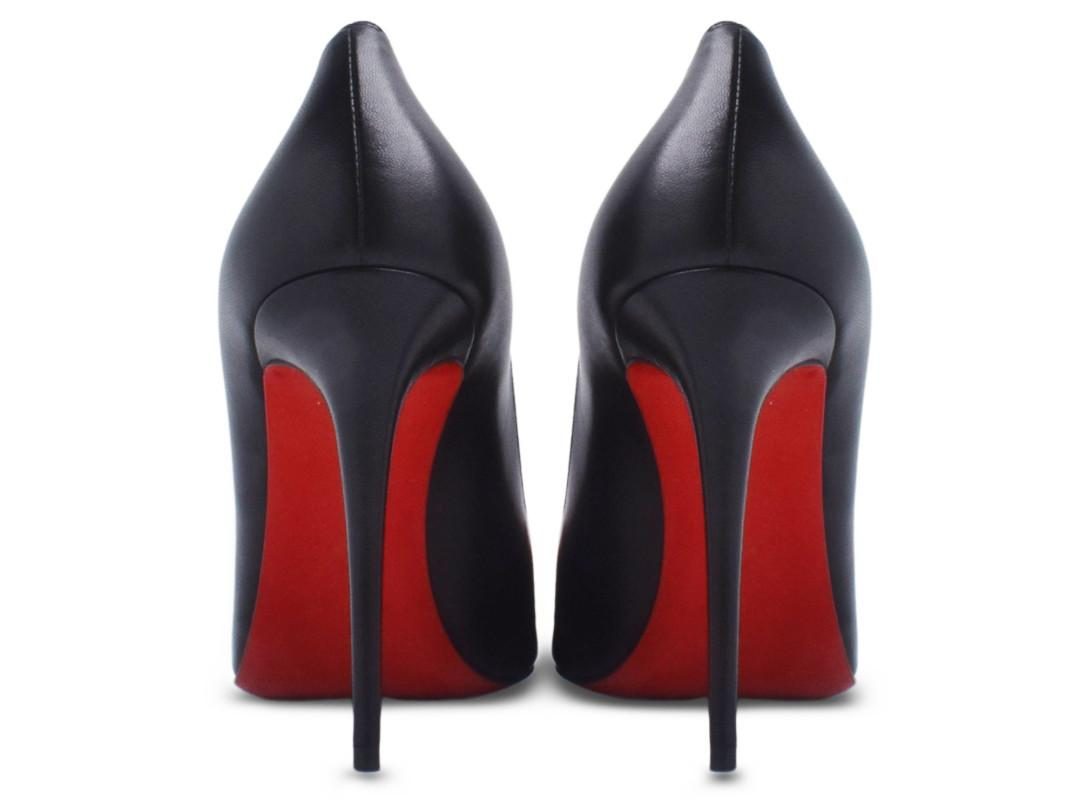
The case shows the difference between consumers associating a colour with a business and that business having enforceable rights over it. A similar point was made in the United States in Christian Louboutin SA v Yves Saint Laurent America Holding Inc, 696 F 3d 206 (2d Cir 2012), where protection for Louboutin’s red sole was limited to soles contrasting with the rest of the shoe.
Shape: the Moccona jar
In Koninklijke Douwe Egberts BV v Cantarella Bros Pty Ltd [2024] FCA 1277, the Federal Court dismissed claims that Vittoria’s coffee jar infringed a registered shape mark associated with Moccona. Owning a registered shape mark does not make every product with similar physical features infringing.
Beyond trade marks
Even where registered trade mark infringement fails, a business may face claims under s 18 (misleading or deceptive conduct) or s 29 (false or misleading representations) of the Australian Consumer Law, in Schedule 2 to the Competition and Consumer Act 2010 (Cth), or in passing off. Adidas’s allegations about White Fox’s advertising show how these issues can sit alongside a trade mark claim.
What should businesses do?
- Search beyond names and logos. Trade mark searches should also cover registered shapes, colours, patterns and packaging.
- Consider all forms of protection. Distinctive product appearance may also be protectable under the Designs Act 2003 (Cth).
- Watch your marketing. How a product is styled and advertised can be as important as the design itself.
- Get advice before launch. This is especially important where a design resembles a competitor’s branding.
The bottom line
Australian trade mark law protects distinctive branding without restricting the ordinary use of colours, shapes and decorative features. The Adidas–White Fox case brings that tension into sharp focus. Adidas has succeeded before, but the outcome will turn on the particular marks, the disputed designs and whether the stripes are used as a trade mark.
Do not assume that changing a design slightly makes it safe. Equally, do not assume that a competitor’s famous branding gives it rights over every similar design element.
IS YOUR BRAND AS SAFE AS YOU THINK?
Ask yourself:
- Have you checked whether your product’s shape, colour or pattern looks like someone else’s registered trade mark, or did you only search the name?
- If a competitor copied your packaging tomorrow, could you stop them?
- Do your marketing photos style your products alongside other well-known brands?
- Do you know who actually owns the designs and artwork your business uses?
- Would your current trade mark registrations still cover your business if you expanded into new products or overseas?
If you weren’t sure about any of these, now is the time to talk to us, before you launch, print or advertise, not after the letter arrives.
Sharon Givoni Consulting helps businesses identify risks, protect what makes their brand distinctive, and respond with confidence when disputes arise.
At Sharon Givoni Consulting, we explain your rights in plain English, because we’re all about Turning Legalese into Legal Ease®.
Further Reading
Sharon Givoni, “Brand protection for designers”
https://sharongivoni.com.au/?p=1985
Sharon Givoni, “Barbie and Brand Control: The Power of Licensing and Trade Mark Protection”
https://sharongivoni.com.au/barbie-and-brand-control-the-power-of-licensing-and-trade-mark-protection/
Sharon Givoni, “Same same but different – when you choose the same brand as someone else’s”
https://sharongivoni.com.au/same-same-but-different/
Sharon Givoni, “Why Registering a Business Name Does Not Protect Your Brand”
https://sharongivoni.com.au/why-registering-a-business-name-does-not-protect-your-brand/
Mediaweek, “Adidas takes White Fox to court over four stripes” (6 October 2026)
https://www.mediaweek.com.au/adidas-takes-white-fox-to-court-over-four-stripes
Creative Bloq, “Adidas sues White Fox in battle of the stripes”
https://www.creativebloq.com/news/adidas-sues-white-fox-in-battle-of-the-stripes
CP24 (CNN), “Adidas sues White Fox fashion label over four stripes design” (9 October 2026)
https://www.cp24.com/news/world/2026/10/09/adidas-sues-white-fox-fashion-label-over-four-stripes-design/
Greek City Times, “Adidas sues Greek Australian brand White Fox over four-stripe designs” (9 October 2026)
https://greekcitytimes.com/2026/10/09/adidas-sues-white-fox-greek-australian-four-stripes/

From Cadbury’s purple to Louboutin’s red soles and distinctive perfume bottles – even colours and shapes can become valuable trade marks.
Please note the above article is general in nature and does not constitute legal advice.
Please email us info@iplegal.com.au if you need legal advice about your brand or another legal matter in this area generally.