





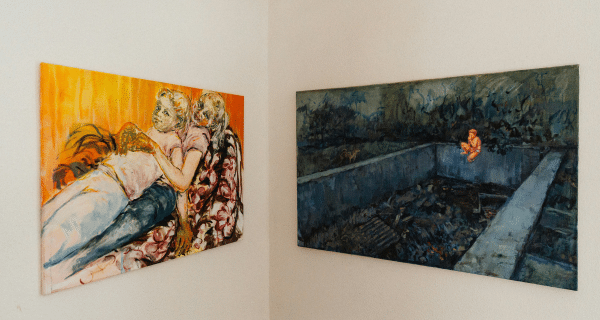

Credits: trnava university (Unsplash)
Can I Really Use That?
In Part 1, we looked at some of the biggest copyright myths, including whether you can copyright an idea, what “original” really means, and where inspiration ends and infringement begins. In this second instalment, we’re turning to the questions I hear almost every week from clients.
Can you use an image you found on Google? Does giving credit make it legal? Is there really a 10% or 30% rule? And where does AI fit into all of this? Like many areas of copyright law, the answers are often surprising.
Before I start, I want to remind you creative people often borrow from those who came before them. Artists study artists. Designers follow trends. Writers are shaped by the books they’ve read. Musicians are influenced by the songs they’ve heard. As one copyright scholar said, creators are, in many ways, “borrowers”. They know how to transform what has come before into something new.
Australian copyright law recognises this.
It isn’t designed to stop creativity—it exists to protect original expression while leaving ideas, inspiration and innovation free for the next generation to build upon.
This article explores where the law draws that line. It separates common copyright myths from legal reality and explains what Australian businesses, creatives and innovators need to know before they create, copy, collaborate or accuse someone else of doing the wrong thing.
If it’s on Google, can I use it?
Let’s start with one of the most persistent myths, at least that i know about.
Many people assume that if an image appears in a Google search, it’s free to use. Not so. Google is a search engine, not a licence. It simply helps you find content that exists elsewhere on the internet. It doesn’t tell you who owns the copyright or whether permission is needed.
The same principle applies to Pinterest, Instagram, Facebook and countless other websites. Just because something is publicly visible doesn’t mean it’s in the public domain. In most cases, the creator still owns the copyright and retains the exclusive rights to reproduce and communicate the work under sections 31 and 36 of the Copyright Act 1968 (Cth).
Imagine spotting a beautiful bicycle outside a café. You can admire it. You can photograph it. But you wouldn’t assume you can ride away on it simply because it was sitting there. Copyright works in much the same way.

Gold Coast-based Artist Susan Bradshaw often draws her inspiration directly from nature or, where she works from a photograph, with the photographer’s permission—helping ensure her creativity stays on the right side of copyright law.
What if I give credit?
Another misconception is that giving credit somehow avoids copyright infringement.
Attribution is good manners and can even be legally required. The thingis however – just acknowledging the creator is not the same thing as obtaining permission.
If you copied an entire photograph onto your website and wrote “Photo by Jane Smith”, you may still be infringing copyright. The issue is not whether you admitted where it came from. The question is whether you had the legal right to reproduce it in the first place.
That is why sections 31 and 36 of the Copyright Act are so important. Together, they identify the exclusive rights held by the copyright owner and explain when those rights are infringed.
Copyright Act Quick Guide
Copyright Act 1968 (Cth)
Section 31 – What rights does a copyright owner have?
Sets out the exclusive rights of a copyright owner, including the right to reproduce, publish, communicate and, in some cases, adapt their work.
Section 32 – When does copyright exist?
Explains when copyright subsists in original literary, artistic, dramatic and musical works.
Section 35 – Who owns the copyright?
Generally, the creator owns copyright, although there are important exceptions, particularly for employees and some commissioned works.
Section 36 – When is copyright infringed?
Provides that copyright is infringed where a person, without the copyright owner’s permission, does an act that is reserved exclusively to the copyright owner.
Section 115 – What can a court do?
Sets out the remedies available for copyright infringement, including injunctions, damages, an account of profits and, in appropriate cases, additional damages.
Isn’t there a 10% or 30% rule?
This one refuses to die.
Over the years I’ve heard every variation imaginable. Ten per cent. Twenty per cent. Thirty per cent. Apparently there is a magical number floating around the internet that makes copying legal.
There isn’t.
Australian copyright law doesn’t measure infringement with a ruler or calculator. Instead, courts ask whether a substantial part of the original work has been reproduced. The word “substantial” refers to the importance or quality of what has been taken, not simply the quantity.
That means copying a relatively small but distinctive part of a work may still amount to infringement if it captures an essential or original aspect of the author’s expression.
As the English court observed more than a century ago:
“What is worth copying is prima facie worth protecting.” — University of London Press Ltd v University Tutorial Press Ltd [1916] 2 Ch 601.
What about AI?
No discussion about copyright would be complete without mentioning artificial intelligence.
AI can now produce articles, illustrations, music, software code and marketing material in seconds. But copyright law has not changed as quickly as the technology itself.
Under Australian law, copyright generally protects works created through human intellectual effort. If AI is simply a tool that assists a human creator, copyright may still subsist. Where AI independently generates the work with little or no human creative contribution, however, ownership becomes much less certain.
It’s an area of law that is evolving rapidly, and one that businesses should watch carefully before assuming AI-generated content is automatically protected.
Fun Facts
- Copyright arises automatically. In Australia, there is no copyright registration system. Protection usually arises as soon as an eligible original work is created. That’s right – pen to paper.
- Giving credit isn’t a licence. Attribution does not replace permission.
- There is no 10% rule. Australian courts look at whether a substantial part has been copied, not a percentage.
- Ideas are free. Original expression is what copyright protects.
- Google doesn’t own the internet. Search results are not permission slips.
- Copyright eventually expires. Most literary, artistic, dramatic and musical works remain protected for 70 years after the author’s death, after which they generally enter the public domain.
Copyright Act Cheat Sheet
If you’re new to copyright, these are some of the provisions you’ll hear lawyers refer to most often:
Section 31 – Sets out the exclusive rights that copyright owners enjoy, such as the right to reproduce, publish and communicate their work.
Section 32 – Explains when copyright subsists in original literary, artistic, dramatic and musical works.
Section 35 – Deals with who owns copyright. Although the creator usually owns it, there are important exceptions, particularly in employment and commissioned work.
Section 36 – Explains when copyright in works is infringed.
Section 115 – Sets out the remedies available if copyright is infringed, including injunctions, damages and, in appropriate cases, additional damages.
Final thoughts
Copyright law isn’t designed to stop creativity. Quite the opposite. It encourages creativity by protecting original expression while allowing others to learn from and be inspired by what has come before. It reflects the famous saying, often attributed to Sir Isaac Newton, that we see further by “standing on the shoulders of giants.” Every generation of creators builds on the ideas, techniques and innovations of those before them. Copyright makes that possible by protecting the way ideas are expressed, while leaving the ideas themselves free for others to develop, reinterpret and transform.
The challenge is knowing where the legal line sits. That line isn’t always obvious, particularly when it comes to online content, social media and AI. If you’re unsure whether you can use someone else’s work—or whether someone has copied yours—it’s worth getting advice before a small issue becomes an expensive one.
At Sharon Givoni Consulting, we believe in Turning Legalese into Legal Ease®. We help businesses, creatives and innovators understand copyright in practical, commercial terms, so they can create with confidence and minimise legal risk.
Further Reading
If you enjoyed this article, you may also like these practical guides by Sharon Givoni:
Copyright Myths That Refuse to Die: Why Changing a Work by 10%, Finding It on Google or Paying a Freelancer Does Not Necessarily Give You the Right to Use It
https://sharongivoni.com.au/copyright-myths-that-refuse-to-die/
Can You Use Content Found Online? What Businesses, Marketers, Designers and Creatives Need to Know About Copyright Law in the Age of Social Media, Pinterest and Artificial Intelligence
https://sharongivoni.com.au/can-you-use-content-found-online/
What Can You Do If Someone Copies Your Work Without Permission? Understanding Copyright Infringement
https://sharongivoni.com.au/what-can-you-do-if-someone-copies-your-work-without-permission/
Copyright and the News: When Can the Media Use Your Content?
https://sharongivoni.com.au/copyright-and-the-news/
Please note the above article is general in nature and does not constitute legal advice.
Please email us info@iplegal.com.au if you need legal advice about your brand or another legal matter in this area generally.