






Used under a Creative Commons Licence
Why are colour trade marks difficult to obtain?
WHO SHOULD READ THIS?
Business owners, start-ups, marketers, branding agencies, graphic designers, product manufacturers, food and beverage companies, retailers, intellectual property professionals and anyone considering adopting a signature colour as part of their branding strategy.
If you’ve ever wondered whether your business can “own” a colour—or if you’re investing heavily in packaging and branding—this article is for you.
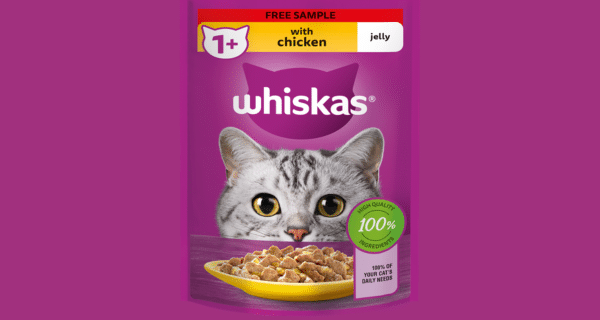
Walk into almost any supermarket and you’ll probably spot Whiskas before you read a single word on the packet.
Not because of the cat. Not because of the logo. You’ll see it because of the purple.
That unmistakable wall of rich purple has become so synonymous with Whiskas that many Australian shoppers can identify the brand from several metres away without ever seeing the word WHISKAS.
Now this isn’t an accident.
It is the result of one of Australia’s most successful branding strategies.
More surprisingly, it is also one of Australia’s most fascinating trade mark stories.
Because the obvious question is this.
Can anybody actually own a colour?
At first glance, the answer ought to be no. After all, colours belong to everyone. Surely one business can’t simply claim exclusive rights over blue, green, red or purple. Yet Australian trade mark law says that, in the right circumstances, a colour can become a valuable piece of intellectual property.
The catch however is that getting there can be a challenge and the Whiskas example demonstrates exactly why.
It also shows why you should think very carefully before trying to file a colour trade mark application yourself.
Colours are not your ordinary trade marks
When most people think about trade marks, they usually think about names such as Nike, Apple, Google or Bunnings. Others think about logos, catchy slogans or perhaps a distinctive symbol that appears on products or advertising. Few people realise that Australian trade mark law extends far beyond words and logos. In fact, some of the world’s most valuable brands have built recognition around features that consumers hardly notice consciously at all, such as the shape of a bottle, the sound of a jingle or, in rare cases, even a single colour.
The legal basis for this is found in the Trade Marks Act 1995 (Cth). Section 17 defines a trade mark as:
“a sign used, or intended to be used, to distinguish goods or services dealt with or provided in the course of trade by a person from goods or services so dealt with or provided by any other person.”
The definition of a “sign” is deliberately broad. Section 6 of the Trade Marks Act 1995 (Cth) provides that a sign includes “the following or any combination of the following, namely, any letter, word, name, signature, numeral, device, brand, heading, label, ticket, aspect of packaging, shape, colour, sound or scent.”
That list often surprises business owners. While most people expect words and logos to qualify as trade marks, fewer appreciate that Parliament deliberately included colours within the statutory definition. In other words, Australian law expressly recognises that, in the right circumstances, a colour can perform exactly the same function as a business name or logo—it can tell consumers where goods or services come from.
However, that does not mean every attractive colour is capable of registration. There is a world of difference between a colour that simply makes packaging look appealing and one that has become a badge of origin in the minds of consumers. Trade mark law is concerned with the latter.
That distinction explains why colour trade marks are among the most difficult forms of intellectual property to register. Unlike an invented word or a unique logo, colours are part of the everyday language of commerce. Businesses use them to communicate flavour, quality, emotion, luxury, freshness and countless other marketing messages. If one trader could easily obtain a monopoly over a basic colour, competitors could quickly find themselves with fewer legitimate branding options.
It is for this reason that colour applications are examined particularly carefully under the Trade Marks Act 1995 (Cth). While section 6 allows colours to be registered in principle, applicants must still satisfy the requirements of section 41, which requires the trade mark to be capable of distinguishing one trader’s goods or services from those of another. As the Whiskas litigation demonstrates, that is often where the real battle begins.
Colours are not your ordinary trade marks
When most people think about trade marks, they think about business names such as Nike, Apple, Google or Bunnings. Others picture a distinctive logo, a catchy slogan or perhaps an iconic symbol that instantly identifies a product or service. Few people realise that Australian trade mark law extends well beyond words and logos. In fact, some of the world’s most recognisable brands have built enormous goodwill around features that consumers may hardly notice consciously at all, including the shape of a bottle, the sound of a jingle, the appearance of packaging and, in rare cases, even a single colour.
The legal basis for this is found in the Trade Marks Act 1995 (Cth). Section 17 defines a trade mark as:
“a sign used, or intended to be used, to distinguish goods or services dealt with or provided in the course of trade by a person from goods or services so dealt with or provided by any other person.”
Importantly, the legislation does not limit that “sign” to words or logos. Section 6 of the Trade Marks Act 1995 (Cth) deliberately casts the net much wider, providing that a sign includes “the following or any combination of the following, namely, any letter, word, name, signature, numeral, device, brand, heading, label, ticket, aspect of packaging, shape, colour, sound or scent.”
For many business owners, that comes as a surprise. Parliament has expressly recognised that a colour can perform exactly the same function as a company name or logo. If consumers see a particular colour and immediately think of one trader—and no one else—that colour may be capable of functioning as a trade mark.
However, there is an important distinction between what the legislation allows in theory and what can actually be registered in practice. The fact that colours fall within the statutory definition of a trade mark does not mean they are automatically entitled to protection. Quite the opposite. Colour trade marks are among the most difficult registrations to obtain.
The reason is simple. Unlike an invented word or a unique logo, colours belong to everyone. Businesses use them every day to convey flavour, quality, emotion, luxury, freshness or simply to make products look attractive. Granting one trader exclusive rights over a colour could significantly restrict the branding choices available to competitors.
Section 6 of the Trade Marks Act 1995 (Cth) expressly permits colour marks, applicants must still overcome the significant hurdle contained in section 41, which requires the trade mark to be capable of distinguishing one trader’s goods or services from those of another. In other words, it is not enough that a colour looks distinctive.
The question is often whether consumers have actually come to regard that colour as indicating the source of the goods rather than simply part of the packaging.
That distinction lies at the heart of every successful colour trade mark application. It also explains why the Whiskas litigation became such an important decision. Mars was not asking the Court to recognise that purple looked attractive on cat food packaging. It was asking the Court to find that, in the minds of Australian consumers, one particular shade of purple had become shorthand for one brand and one brand alone.
Final thoughts
The Whiskas case is ultimately about much more than cat food.
It demonstrates how branding, marketing and intellectual property law work together to create one of a company’s most valuable commercial assets.
Mars did not persuade the Federal Court that it owned the colour purple.
It persuaded the Court that, through years of careful, deliberate and consistent use, one particular shade of purple had become a symbol of origin. For Australian consumers, that colour no longer merely decorated packaging—it identified Whiskas.
For businesses, if you are serious about making a colour part of your brand identity, start by using it consistently and strategically. Invest in building consumer recognition. Keep records of your advertising, sales and marketing activities. Above all, obtain specialist advice before filing an application.
Colour trade marks are not impossible to obtain.
They are simply among the most difficult.
As the Whiskas case shows, success usually requires three ingredients working together: exceptional branding, compelling evidence and careful legal drafting.
The Federal Court noted that Whiskas Purple was the predominant colour on the packaging for all varieties of Whiskas cat food, producing what was effectively a “wall” of purple on shelf. The colour was applied across SKUs, life‑stage ranges and formats (wet pouches, tins and dry food), so the same shade appeared irrespective of flavour or product type.asiaiplaw+2
This uniform use meant that, over time, consumers did not treat the purple simply as decoration or a flavour cue. Rather, they used it as a quick visual shortcut to identify Whiskas cat food and distinguish it from other brands, before engaging with variant names or detailed information. That pattern of use – a single colour applied consistently across a broad, but clearly defined, cat‑food portfolio – was central to the Court’s finding that Whiskas Purple functioned as a badge of origin and was capable of distinguishing Mars’ goods for the purposes of the Trade Marks Act 1995 (Cth).
PRACTICAL TIPS FOR BRAND OWNERS
Thinking about protecting a colour? Keep these points in mind before filing a trade mark application:
- Choose your colour strategically. A colour should form part of your overall branding strategy—not simply because it looks attractive.
- Use it consistently. Courts look for long-term, consistent use across packaging, advertising, websites, social media and promotional material.
- Keep evidence from day one. Marketing expenditure, sales figures, media coverage, customer recognition and examples of use may all become critical if you later need to prove acquired distinctiveness.
- Don’t assume you own a colour because you’ve used it first. Registration depends on satisfying the requirements of the Trade Marks Act 1995 (Cth), particularly section 41.
- Don’t prepare the application yourself. Colour trade marks are among the most technically complex applications filed with IP Australia.
The wording of the application, the colour description, the specification of goods and services and the supporting evidence can all determine whether the application succeeds or fails. Mistakes made at the filing stage are not always possible to correct later.
As Whiskas demonstrates, owning a colour as a trade mark may be possible—but only where exceptional branding is matched with exceptional legal preparation.
Further Reading
- Shape Trade Marks in Australia: Can You Protect the Shape of Your Product?
- Product Packaging Disputes: Where Courts Draw the Line
- Falling in Love with Your Brand Name (and Why the Law Doesn’t Always Agree)
- How to Avoid Your Brand Becoming Generic
- Mastering Brand Identity: Sub-brands and Family Trade Marks
- Use It or Lose It: What Happens If You Do Not Use Your Trade Mark?
https://sharongivoni.com.au/sweet-shapes/
https://sharongivoni.com.au/product-packaging-and-the-law-whats-fair-game/
https://sharongivoni.com.au/how-to-avoid-your-brand-becoming-generic/
https://sharongivoni.com.au/creating-sub-brands-the-power-of-family-trade-marks/
https://sharongivoni.com.au/use-it-or-lose-it-what-happens-if-you-do-not-use-your-trade-mark/
As Whiskas demonstrates, owning a colour as a trade mark may be possible—but only where exceptional branding is matched with exceptional legal preparation.

This isn’t just a pretty shade of purple—it’s a registered trade mark that helped Whiskas stand out from the competition.
Please note the above article is general in nature and does not constitute legal advice.
Please email us info@iplegal.com.au if you need legal advice about your brand or another legal matter in this area generally.