





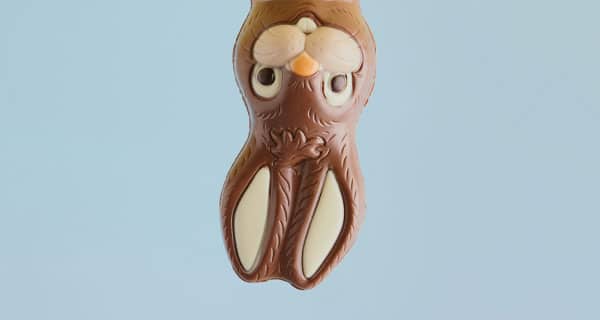

Credit: Olivie Strauss (Unsplash)
Sweet Shapes
When your chocolate is your trade mark
Who should read this
If you are in food, packaging, branding, or any business where your product looks distinctive — not just sounds distinctive — this one is for you. It is also for founders who suspect their “thing” is not the name… it is the shape sitting quietly on the shelf, doing all the heavy lifting.
What is a Shape Trade Mark in Australia?
A shape trade mark in Australia is a registered trade mark that protects the physical shape of a product or its packaging where it distinguishes one trader from another.
There is something slightly magical — and slightly absurd — about the idea that a chocolate can own its own silhouette.
Not the name. Not the logo. Not even the wrapping.
The shape.
Because somewhere between a child unwrapping a treat and an adult reaching for something familiar in the supermarket aisle, a quiet legal transformation happens. That triangular prism, that gold-wrapped bunny, that trapezium bar — they stop being food and start being source identifiers. They start whispering: “You know me.”
And that, in shape trade marks, is everything.
If you have ever held a triangular chocolate and immediately thought of a particular brand, you have already done the legal work. Courts call it distinctiveness. Consumers call it habit. Lawyers call it a very good day at the office.
Why Shape Trade Marks in Australia Are So Hard to Register
Looking at the confectionery landscape, it is almost theatrical how far this goes. There is the elongated egg-shaped container (yes, even that is registered), the chocolate frog in multiple perspectives, and the iconic triangular box associated with Toblerone. There are interlocking triangular serrations, trapezium chocolate bars like KitKat, and even cartoon-shaped biscuits standing upright like they have somewhere important to be.
And then, of course, there is the gold rabbit with a ribbon — a confectionery icon so recognisable it barely needs an introduction. It sits somewhere between chocolate and folklore, wrapped in foil but legally wrapped even tighter in trade mark protection.
What is going on here is not just branding. It is behavioural psychology meeting intellectual property law.
Because shape trade marks in Australia are hard. Very hard.
Unlike words or logos, which consumers are trained to read and interpret as brands, shapes start life as… well, shapes. Functional. Decorative. Sometimes just convenient. A bottle is a bottle. A chocolate bar is a chocolate bar. A jar is a jar.
The law asks a deceptively simple question: would a consumer look at this shape alone, without a label, and think of a single trader?
If the answer is yes, congratulations. You are no longer selling confectionery. You are selling identity.
But getting there is the long game.

Not every sweet shape is legally distinctive. While chocolate shapes and even packaging can be registered as trade marks, protection only works where the design points to a single brand — not where it has become common in the trade (think generic chocolate shells).
When a Product Shape Becomes a Trade Mark
Take something like the trapezium chocolate bar. On paper, it is just geometry having a moment. In reality, it becomes distinctive through relentless, consistent use. Advertising. Shelf presence. Packaging repetition. Consumer exposure. Over time, the shape stops being incidental and starts being intentional.
Or consider the Kinder-style egg shape — that rounded, sealed form that feels almost architectural in its simplicity. Again, the law does not care that it looks nice. It cares that consumers recognise it.
Even the humble jar — Nutella’s glass jar with its particular proportions and label positioning — has been captured in shape trade marks. Because sometimes, the product is not just what is inside. It is the ritual of how it appears on your kitchen bench.
And then there are the delightfully strange ones.
Chocolate shaped like prawns and shell-style assortments have certainly been attempted. But not everything novel makes it through the registration process — which tells you something important about how strict shape trade mark protection in Australia really is.
By contrast, some shapes have crossed that line into recognisable brand assets. Think of the classic Lindt gold bunny with its ribbon and bell, which has become almost inseparable from its source.
The thread running through all of this is simple: creativity gets you noticed, but recognition — the kind courts are prepared to accept — is what gets you registered.
The Legal Reality Behind Shape Trade Marks
Think of the classic Lindt gold bunny with its ribbon and bell, which has become almost inseparable from its source (in Australia, shape distinctiveness turns on consumer recognition — see Kenman Kandy Australia Pty Ltd v Registrar of Trade Marks [2002] FCA 273).
Or the trapezium configuration of a KitKat bar, where the geometry itself has done years of branding work — but also shows how difficult these claims can be in practice, with courts requiring proof that consumers see the shape itself as a badge of origin.
Even the Chupa Chups display stand — that circular, wheel-like holder — has been registered, proving that sometimes it is not even the product, but how it is presented, that carries distinctiveness.
Then there are playful but protectable forms like chicken drumstick snacks, which sit right on the line between novelty and identity.
The broader principle in Australian law is clear: if a shape is merely functional or commonplace, it will struggle — shape trade marks require distinctiveness built through use, reputation and consumer perception, not just design choice.
Case Snapshot: Why Evidence Matters
In Kenman Kandy Australia Pty Ltd v Registrar of Trade Marks [2002] FCA 273, the applicant tried to register the shape of its confectionery but failed because the shape was not inherently distinctive and consumers did not see it as indicating a single source.
The Court made clear that shape trade marks depend heavily on evidence — you must show the public recognises the shape as a brand, not just as a product.
At What Point Does Novelty Become Your Brand Identity?
Each example raises the same question: at what point does novelty become identity?
In other words, when does something that just looks different or clever become something people actually recognise as coming from one brand?
A quirky shape might catch attention at first. But it only becomes legally protectable when consumers start to see that shape and think of a specific source — that is when novelty becomes identity.
Why Shape Trade Marks Are a Strategic Asset
If you are building a brand today, especially in food, beverage or consumer goods, your instinct may be to focus on the name. That is natural. Names are easy to register, easy to enforce, easy to explain.
But shapes — they can be a bit sticky.
They live in memory differently. They bypass language. You might not always remember the brand name of a product you love, but you remember how it looks.
Which is why shape trade marks in Australia, when they work, are extraordinarily powerful.
They are also fragile.
If your shape is too functional, the law will push back. If it is too common, the law will shrug. If it is not consistently used, the law will forget.
And if competitors start circling with “similar but not quite” designs, you will suddenly wish you had protected it earlier.
Tips for Protecting Shape Trade Marks in Australia
Start early. If your product shape is unusual, think about trade mark protection before the market gets crowded.
Be consistent. Shape distinctiveness is built through repetition. Change it too often and you dilute your own case.
Document use. Photos, packaging, advertising — all of it matters when proving consumers recognise your shape.
Think beyond the obvious. It might not be the product itself — it could be the packaging, the container, even the display stand.
And most importantly, do not assume your “nice design” is legally meaningless. In the right circumstances, it might be your strongest asset.
Fun Fact: The Sweet Side of Shape Trade Marks
Did you know that in Australia, trade marks are not limited to words and logos?
Shapes, colours, scents and even aspects of packaging can be registered if they distinguish one trader from another.
In the confectionery world, this has led to registrations covering everything from triangular chocolate configurations to gold-wrapped rabbits with ribbons, egg-shaped containers, and even stylised umbrella-shaped chocolates.
The law does not reward creativity alone — it rewards recognition.
How We Can Help (Legal Ease, Not Legalese®)
At Sharon Givoni Consulting, this is exactly where we come in. We help businesses identify what is truly distinctive about their brand — whether that is a name, a product shape, or even the way something is packaged — and turn it into a protectable asset.
It is about strategy as much as law. And, as always, it is about legal ease, not legalese® — clear, practical advice that helps you make confident commercial decisions.
Wrap Up
At the end of the day, confectionery teaches us something quietly profound about trade marks. People do not always remember what you say. But they remember what you are.
And sometimes, what you are… is a triangle.
The Legal Recipe: Key Laws & Cases for Shape Trade Marks
Shape trade marks in Australia are grounded in the Trade Marks Act 1995 (Cth), as well as to some extent, the Competition and Consumer Act 2010 (Cth) (Australian Consumer Law).
The essentials are straightforward. Section 17 confirms that a trade mark can include a shape. Section 41 is where most applications succeed or fail — your shape must be distinctive, not just attractive or functional. Section 44 deals with conflicts with earlier marks, and section 60 protects well-known shapes with established reputations. Alongside this, ACL provisions like sections 18 and 29 step in where packaging or product shape misleads consumers about origin.
Further reading
World Intellectual Property Organization (WIPO) – What Can Be a Trade Mark?
https://www.wipo.int/trademarks/en/
Australian Institute of Food Science and Technology – Packaging, Branding and Food Products
https://www.aifst.asn.au/
Please note the above article is general in nature and does not constitute legal advice.
Please email us info@iplegal.com.au if you need legal advice about your brand or another legal matter in this area generally.