





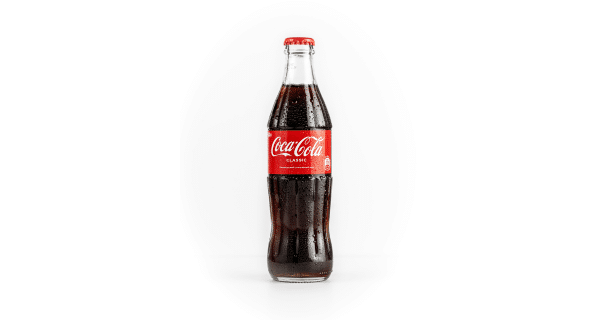

Credit: Ivan Yerokhin (Unsplash)
Your Brand Is Worth More Than You Think
Why trade marks are often a business’s most valuable asset — and why waiting to protect them can be an expensive mistake
There was a time when a brand was seen as little more than a logo, a sign above a shopfront or a catchy slogan attached to a product.
Today, that idea feels almost quaint.
Modern businesses are often built on intangible assets. In many cases, the most valuable thing a company owns is not its equipment, premises, stock or even its products. It is the reputation, goodwill and consumer recognition attached to its brand.
Think about it. If someone offered you a choice between buying a nameless soft drink and a Coca-Cola, most people already know which one they trust. If someone offered you a pair of shoes with a swoosh on the side, you already know who made them before you even see the word NIKE.
That recognition is not accidental.
It is carefully cultivated over years, sometimes decades, through marketing, reputation-building and consumer experience. The result is something remarkably powerful: a brand that exists not in a factory or warehouse, but inside people’s minds.
And once a brand occupies space in people’s minds, it can become extraordinarily valuable.
The challenge is that many business owners spend years building that value before they think seriously about protecting it.
That is often where the trouble begins.
The Strange Thing About Brands
Brands are peculiar creatures.
You cannot touch them. You cannot hold them. They do not sit neatly on a shelf.
Yet they can be worth millions of dollars.
When Philip Morris acquired Kraft in 1988 for a figure reportedly far exceeding the company’s tangible asset value, commentators pointed to one major reason for the premium paid: the power of the Kraft name itself.
The same principle applies on a smaller scale.
A local café may build a loyal following because people recognise its name. A fashion label may attract customers because buyers associate the brand with a particular style. A software company may become known for reliability, innovation or trustworthiness.
Over time, the name itself begins doing part of the selling.
The brand becomes shorthand for a promise.
That promise has value.
And value attracts attention.
Including attention from competitors.
Why Copycats Rarely Copy the Worst Businesses
There is an old saying that imitation is the sincerest form of flattery.
From a legal perspective, it is often something else entirely.
When competitors start adopting names, logos, colours, packaging styles or branding elements that resemble yours, it is usually because they have recognised the commercial value of what you have built.
Nobody rushes to imitate a failing business.
They imitate successful ones.
The difficulty is that by the time a business owner discovers somebody else is using a similar name or brand, significant damage may already have been done.
Customers may become confused.
Potential clients may assume the businesses are connected.
Online searches may become muddied.
Reputation can become diluted.
And the cost of fixing the problem can be far greater than the cost of preventing it in the first place.
The Trade Mark Mistake Many Businesses Make
One of the most common misunderstandings in business is the belief that registering a company name or business name automatically gives exclusive ownership rights.
It does not.
This surprises many people.
After all, if the government allowed you to register the name, surely that means nobody else can use it?
Not necessarily.
Business name registration and company registration largely serve administrative purposes. They help identify who is operating a business. They do not automatically grant the broad proprietary rights that a registered trade mark can provide.
This distinction catches many businesses off guard.
A company can spend years trading under a name, investing heavily in marketing and building goodwill, only to discover that somebody else owns a registered trade mark for a similar brand.
At that point, the conversation becomes considerably more expensive.
Marketing Creates the Magic
A trade mark registration is powerful.
But registration alone is not what creates a valuable brand.
Marketing does.
Consumers do not wake up one morning and suddenly associate a particular shape, colour or symbol with a company.
That association is carefully engineered.
When people see a triangular prism and immediately think of Toblerone, that is branding.
When people see a curvaceous bottle shape and think of Coca-Cola, that is branding.
When people see a distinctive colour scheme and instantly recognise a company, that is branding.
What makes these examples fascinating is that consumers often recognise the brand before they see any words at all.
The shape becomes the trade mark.
The colour becomes the trade mark.
The pattern becomes the trade mark.
The visual cue itself becomes a commercial asset.
That is why businesses should think beyond logos.
Sometimes the most valuable intellectual property is hidden in plain sight.
Trade Marks Are Not Just Words
Many people assume trade marks only protect names.
In reality, Australian trade mark law can protect a wide variety of brand elements.
Depending on the circumstances, protection may extend to colours, shapes, packaging configurations, patterns and other distinctive indicators of commercial origin.
Some examples that have been registered include:
The shape of the Arnott’s teddy bear biscuit.
The shape of the Weber barbecue.
The shape of the Freddo Frog chocolate.
The shape of a Porsche sports car.
The shape of McDonald’s chip packaging.
Distinctive colours used by businesses such as BP and other well-known brands.
The famous stitching pattern on the back pocket of Levi’s jeans.
This illustrates an important point.
Your brand may be much larger than your logo.
Sometimes your packaging is the brand.
Sometimes your colour palette is the brand.
Sometimes your product shape is the brand.
Sometimes your overall visual identity is the brand.
The Golden Rule: Distinctiveness Matters
Not everything can be monopolised.
The law generally aims to balance private rights with fair competition.
As a result, trade mark protection is strongest where the branding element is distinctive rather than functional.
You cannot generally claim exclusive rights over features that competitors legitimately need to use.
A safety product may need to use fluorescent yellow.
A warning sign may need to use red.
Scissors need handles and blades arranged in a certain way if they are to function as scissors.
The more distinctive and unusual the branding element, the stronger the prospects for protection.
The more functional it is, the more difficult registration becomes.
This is why brand strategy should be considered from the outset rather than after a business becomes successful.
Registration Is Only the Beginning
Many business owners treat trade mark registration as a finish line.
In reality, it is the starting line.
A trade mark is an asset that requires ongoing management.
The law operates largely on a “use it or lose it” principle. If a registered mark is not used, it may become vulnerable to removal from the Trade Marks Register.
Businesses should also avoid allowing their brands to become generic descriptions.
History is littered with examples of once-distinctive trade marks that eventually became ordinary words.
A successful trade mark should function as a badge of origin rather than simply a description of a product.
Consistency also matters.
Businesses should use their trade marks consistently, renew registrations when required and review whether additional products or services should be covered as the business expands.
A trade mark should be treated like any other valuable business asset.
Because that is exactly what it is.
The Real Cost of Waiting
One of the most painful conversations lawyers have with business owners usually begins with the same sentence:
“I wish I had done this earlier.”
By the time a dispute arises, businesses may already have invested years developing websites, social media accounts, packaging, signage, advertising campaigns and customer recognition.
Changing a brand at that stage can be extraordinarily costly.
The legal fees are often only part of the problem.
The real cost is rebuilding trust, recognition and goodwill.
In many cases, early trade mark protection would have cost only a fraction of the expense later incurred trying to resolve the dispute.
If Your Brand Disappeared Tomorrow…
Here is a useful thought experiment.
Imagine your business lost every physical asset overnight.
The office.
The stock.
The computers.
The furniture.
Everything.
What would remain?
For many businesses, the answer is surprisingly simple.
Their reputation.
Their customer relationships.
Their goodwill.
Their brand.
And if that brand is what keeps customers coming back, perhaps it deserves the same level of protection as every other valuable asset in the business.
Maybe more.
What Would A Copycat Steal First?
If somebody wanted to imitate your business tomorrow, what would they copy?
Your office furniture? Probably not.
Your filing system? Unlikely.
Your coffee machine? Hopefully not.
More often than not, they would copy the thing customers recognise and remember: your name, your branding, your packaging, your visual identity or the reputation attached to them.
That is precisely why trade marks matter. They help protect the commercial shortcuts that consumers use to identify your business in a crowded marketplace. If your brand is one of the first things a competitor would want to imitate, it is probably one of the first things you should be protecting.
Why Use a Trade Mark Lawyer?
Trade mark registration may look deceptively simple. Filing an application is often the easy part.
The real challenge lies in choosing a registrable brand, identifying risks before they become expensive disputes, selecting the correct classes of goods and services, conducting proper clearance searches and developing a protection strategy that aligns with future business growth.
A trade mark lawyer can help identify issues before money is spent on branding, packaging, websites and marketing campaigns. They can also assist with oppositions, infringement disputes, licensing arrangements, assignments, coexistence agreements and international protection strategies.
The goal is not simply to obtain a registration.
The goal is to build and protect a valuable business asset.
Sharon Givoni Consulting
At Sharon Givoni Consulting, we assist businesses, entrepreneurs, retailers, creatives, designers and innovators with trade marks, branding, copyright, intellectual property strategy and commercial law.
We believe in helping clients turn ideas into assets and protecting the value they create before problems arise.
Because good legal advice is often far less expensive than fixing a preventable mistake later.
Please note the above article is general in nature and does not constitute legal advice.
Please email us info@iplegal.com.au if you need legal advice about your brand or another legal matter in this area generally.