





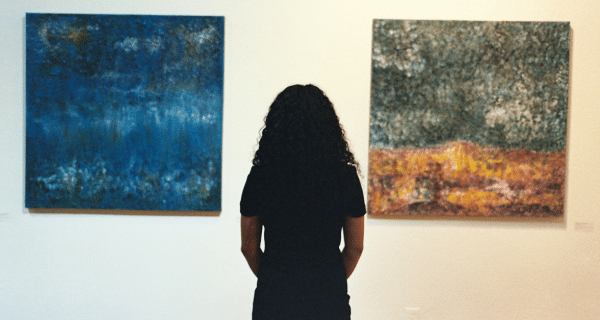

Credits: mscc (Unsplash)
Copyright, originality and why ideas aren’t protected
“Good artists copy; great artists steal.” It’s one of the most quoted—and most misunderstood—lines in the creative world.
Whether Pablo Picasso really said it is almost beside the point. The quote captures a question I’ve been asked countless times over the past 25 years as an intellectual property lawyer.
“I saw something on Pinterest. Can I use it?”
“I’ve changed it by 30%. Is that enough?”
“Someone copied my design, but they say they were just ‘inspired’.”
“Can I copyright an idea?”
If you’ve ever asked yourself one of those questions, you’re in good company.
The truth is, copyright law doesn’t always work the way people expect. One of the biggest surprises for many clients is that you can’t own an idea. What you can own is the original way you’ve expressed that idea.
It sounds simple enough.
Until it isn’t.
Who should read this?
This article is for business owners, artists, designers, architects, photographers, writers, marketers, content creators, software developers—indeed anyone who creates something and wants to know whether the law protects it.
If you’ve ever wondered where inspiration ends and infringement begins, keep reading.
What you’ll learn
In Part 1 we’ll answer questions such as:
- Can you copyright an idea?
- What does “original” actually mean?
- Does something have to be completely new?
Can you copyright an idea?
Let’s start with perhaps the biggest misconception of them all.
No.
Ideas themselves are not protected by copyright.
That might sound surprising.
After all, haven’t you ever heard someone say, “Don’t tell anyone my idea—they’ll steal it!”
Here’s the thing.
Copyright has never protected ideas. It protects the original expression of those ideas.
Imagine you decide to write a novel about a wizard attending a magical school.
The idea isn’t protected.
But if your wizard wears round glasses, has a lightning-shaped scar and attends Hogwarts, you’ve got a rather different problem.
The law has drawn this distinction for centuries because if people could own ideas, creativity would grind to a halt. Nobody could write detective stories after Sherlock Holmes or romantic comedies after Shakespeare.
Instead, copyright encourages creativity by allowing everyone to build upon ideas—provided they don’t copy someone else’s original expression.
Australian copyright law reflects this principle through the Copyright Act 1968 (Cth), which protects original literary, artistic, dramatic and musical works (see, for example, ss 31 and 32). But simply having a clever concept isn’t enough.
What does “original” actually mean?
Here’s another question I hear almost weekly.
“My logo isn’t completely unique. Does that mean I don’t own copyright?”
Or perhaps:
“Everything’s been done before, hasn’t it?”
The answer might surprise you.
In Australia, original doesn’t mean brand new.
It doesn’t mean revolutionary.
It doesn’t even mean particularly creative.
Instead, originality generally means that the work originated from you. In other words, it wasn’t copied.
That principle was reinforced by the High Court in IceTV Pty Ltd v Nine Network Australia Pty Ltd [2009] HCA 14, which emphasised that copyright protects the product of independent intellectual effort rather than mere information or facts.
That’s a subtle but incredibly important distinction.
Many clients assume copyright is like patents—where novelty is everything.
It isn’t.
Copyright asks a different question:
Did you independently create this work?
If the answer is yes, its a good start.
Does my work have to be completely different?
Not at all. In fact, entire industries depend on following trends. Fashion, interior design, architecture, graphic design, marketing and food packaging all evolve constantly. Colours change, fonts change, shapes change, and consumers expect businesses to move with those trends. Imagine telling every furniture designer they could never produce a curved sofa because someone else had already done it, or every café that it couldn’t use earthy tones because another café got there first. The law simply doesn’t work that way. The real question is whether you’ve copied someone else’s protected expression or independently created your own. As I often tell clients: follow trends, not copies. There’s a world of difference.
Can two people come up with the same thing?
Believe it or not, yes. Courts have long accepted that coincidence happens. A famous example involved two almost identical photographs of Chile’s San Rafael Glacier. Initially, copyright infringement was suspected, but the metadata revealed that two different photographers had taken the photographs from the same tour boat, on the same day, only moments apart. Sometimes, coincidence really is just coincidence.
If everything has been done before, can anything still be original?
Now we’re getting philosophical.
If every song echoes another melody, every fashion trend eventually returns, and every novel is influenced by those that came before it, is originality even possible?
The American author Mark Twain had an entertaining answer.
Writing to Helen Keller after she was accused of plagiarism, he famously remarked: “The actual and valuable material of all human utterances is plagiarism.”
It’s a provocative observation, but there’s a grain of truth in it. Every creator is influenced by the books they’ve read, the music they’ve heard, the buildings they’ve admired and the conversations they’ve had. Truly creating in a vacuum is almost impossible.
Fortunately, the law doesn’t expect that. Copyright recognises that inspiration is inevitable. What it protects is the author’s original expression of an idea—not the ideas, styles or influences themselves. So while you are free to be inspired by what has come before, you cannot simply copy the way someone else has expressed it.
Final thoughts
Creativity doesn’t exist in isolation. Every designer, artist, writer and business owner is influenced by the world around them. The law recognises that. It doesn’t stop you from following trends, learning from others or being inspired. What it does prohibit is crossing the line into unlawful copying.
The difficulty is that the line isn’t always obvious. Sometimes changing a single image, sentence, design feature or marketing claim can make all the difference. That’s why it’s often worth seeking legal advice before launching a new product, campaign or brand—or if someone accuses you of copying theirs.
At Sharon Givoni Consulting, our motto is Turning Legalese into Legal Ease®. We help businesses, creatives and innovators understand their intellectual property rights in practical, commercial terms, so they can create with confidence and minimise legal risk.
Copyright Cheat Sheet: Cases Every Creative Should Know
Key Australian copyright cases
IceTV Pty Ltd v Nine Network Australia Pty Ltd (2009) 239 CLR 458
Originality requires independent intellectual effort. Copyright protects original expression, not mere labour or investment.
Desktop Marketing Systems Pty Ltd v Telstra Corporation Ltd (2002) 119 FCR 491 (largely overtaken by IceTV on originality)
An important historical decision demonstrating how the law on originality has evolved.
Elwood Clothing Pty Ltd v Cotton On Clothing Pty Ltd (2008) 80 IPR 565
Copyright protects the work as a whole. Courts assess substantial reproduction by considering the overall impression rather than individual elements in isolation.
Seafolly Pty Ltd v Fewstone Pty Ltd (2014) 313 ALR 41
Independent creation is a complete answer to a claim of copyright infringement.
Key provisions of the Copyright Act 1968 (Cth)
Section 31 – Defines the exclusive rights comprised in copyright.
Section 32 – Sets out when copyright subsists in original works.
Section 35 – Rules on ownership of copyright.
Section 36 – Copyright infringement of literary, dramatic, musical and artistic works.
Section 101 – Infringement relating to subject matter other than works (such as sound recordings and films).
Section 115 – Remedies for infringement, including injunctions, damages and additional damages.
Section 116 – Delivery up and disposal of infringing copies.
Section 10 – Important definitions used throughout the Act, including “artistic work”, “literary work” and other key concepts.
Please note the above article is general in nature and does not constitute legal advice.
Please email us info@iplegal.com.au if you need legal advice about your brand or another legal matter in this area generally.