







Credits: Mj Duford (Unsplash)
The name is free on Google, but what can still go wrong?
Picking a business name feels like one of the easy parts of starting up. You brainstorm over coffee, check the domain is free, see the Instagram handle is unclaimed, confirm the business name is available on ASIC, and breathe a sigh of relief. Everything lines up. Surely that means the name is yours to use?
The thing is, it doesn’t. None of those checks gives you exclusive trade mark rights or guarantees that you can safely use the name. The key register for checking Australian registered and pending trade marks is the Australian Trade Mark Search system, administered by IP Australia. But even that is not the whole picture: unregistered reputation, passing off, misleading or deceptive conduct and other legal issues can also matter. A trade mark gives rights in relation to particular goods and services, not ownership of a word in every context.ipaustralia.gov+2
That’s the gap that catches out even careful, well-advised founders, often not at launch, but months or years later, when the business has real customers, a real reputation and a lot more to lose.
Before you use that name — get a trade mark search done
Under section 44 of the Trade Marks Act 1995 (Cth), an application generally must be rejected if it is “substantially identical with, or deceptively similar to” an earlier trade mark covering similar goods or services, and the earlier mark has priority. The section contains important exceptions, including provisions concerning honest concurrent use and certain prior continuous use, so rejection is not automatic in every case.
Section 10 defines “deceptively similar” as a mark that “so nearly resembles” another that it is “likely to deceive or cause confusion.” That assessment is not a simple word-matching exercise. It can involve the visual, aural and conceptual similarities between the marks, the relevant goods or services, and the circumstances in which consumers would encounter them.
As IP Australia’s Trade Marks Manual explains, a section 44 objection can arise where the earlier trade mark is registered or is the subject of a pending application. So even a mark that’s only been filed, not yet granted, can in appropriate circumstances block a later application—but a pending application is not the same thing as a registered enforceable right.
It doesn’t stop at identical goods. Section 60 allows a brand with an existing reputation in Australia to oppose a later mark, even where the goods or services are not the same, if use of the new mark would be likely to deceive or cause confusion. Reputation must be established, however, and section 60 is an opposition ground rather than a universal monopoly over a name in every category.
And if you’re already trading, section 120 sets out when you may infringe someone else’s registered mark by using a sign that is substantially identical or deceptively similar to it in relation to the relevant goods or services. You do not need to have applied to register anything yourself, and lack of knowledge will not ordinarily prevent infringement. But section 120 has detailed statutory requirements, and the Act contains exceptions and defences, including provisions concerning prior continuous use and certain permitted uses.legislation.gov
This is precisely why a proper trade mark search — searching the Register itself, not just Google or a domain registrar — is step one, not an optional extra. IP Australia is blunt about it: “Before you apply, do a search to check if your idea already exists.” Its search system covers registered and pending trade marks.
A database search is not the same as a complete clearance exercise. The search should consider identical and similar words, phonetic and visual variations, relevant goods and services, logos, pending applications, and possible unregistered reputation. Where a name is commercially important, professional advice may provide greater certainty.
The nuance that catches good lawyers out
What makes this area genuinely hard is that “similar” is not a simple word-matching exercise. In PB Foods Ltd v Malanda Dairy Foods Ltd 1999 FCA 1602, the Federal Court held that using “CHILL” alone counted as use of the registered mark “CHOC CHILL” for flavoured milk. The case illustrates that use of a mark with additions or alterations can still amount to use of the registered mark where the difference does not substantially affect its distinctive character. It is not a blanket rule that every descriptive part of a mark can simply be ignored, but it is a subtlety that changes how a whole product range should be searched and cleared.
And reputation-based conflicts under section 60 don’t even require the goods to match.
In Campomar Sociedad, Limitada v Nike International Ltd 2000 HCA 12; (2000) 202 CLR 45, the High Court found that marketing a “NIKE” fragrance was likely to mislead consumers into thinking Nike International was behind it—even though Nike didn’t sell perfume. The case is a useful illustration of how reputation can extend beyond a brand’s established product category, although a section 60 opposition and a section 120 infringement claim involve different statutory questions.
A name can look completely clear on a plain word search and still carry legal risk once you factor in reputation, get-up, unregistered use, and the categories a court or the Registrar considers similar or commercially related.
Skipping the search? Here’s what’s at stake
The theory is one thing; watching it play out is another. In 2011, a Darling Harbour restaurant opened using “The Fat Duck”—a name its owners presumably thought was fair game locally. Proceedings followed, and in SL6 Limited v Fat Duck Pty Ltd 2012 FCA 71, the Federal Court restrained the operators from using “Fat Duck” and related branding in connection with the restaurant. The business had to change its branding while trading, with reports identifying the replacement name as “The Naked Duck.” The important point is the disruption: branding, signage, promotional material and online assets may all need to change after launch.
Melbourne’s caravan-hotel concept “NOTEL” tells a slower, more painful version of the same story. Its owner filed the name in 2016; hospitality giant Accor opposed it on behalf of “NOVOTEL.” IP Australia ultimately accepted that there were visual, linguistic and auditory similarities and that confusion was likely in the circumstances of the application. After roughly three years of proceedings and legal fees, NOTEL lost, and in September 2022 relaunched as “HOTEL NO.”
The case is a reminder that a name can be challenged even where the businesses are not identical and the smaller business did not set out to copy the larger one.
And in Christian v Société Des Produits Nestlé SA (No 2) 2015 FCAFC 153, a small supplement seller trading as “A-SASHI” was found to infringe Nestlé’s “MUSASHI” marks. The dispute ran through multiple court levels and concerned the similarity of the competing branding and the way the sign was used in the market.
None of these businesses set out to copy anyone. Each believed, reasonably on the surface, that their name was theirs to use—because a domain was free, a business name was registered, or nobody local seemed to be using it. That is exactly the trap that sections 44 and 60 can catch at the registration stage, and exactly why the Trade Marks Manual and IP Australia’s own search tools exist: a domain, a business-name registration or an ABN check does not grant trade mark rights and does not by itself establish that your proposed use is safe.
A trade mark search before you commit to a name may cost far less than a rebrand after launch—new signage, new packaging, a new domain, lost search rankings and the legal fees of getting there. It won’t always turn up a problem, and it cannot guarantee that no issue exists. But when it does identify a problem, you find out while a name change is still just a decision, not a five-figure scramble happening while customers are watching.
Skipping the search? Here’s what’s at stake
Here is a strange thing about human beings choosing names for the things they love: we treat the absence of an objection as a form of permission. Nobody stopped you on Instagram. The domain registrar didn’t flash a warning. ASIC let you register the business name without so much as a raised eyebrow. And you may think – surely, if this were a problem, someone would have said something by now.
How we can assist at Sharon Givoni Consulting
But the thing that not everyone knows is that the mark register doesn’t notify you when you’re about to collide with somebody else’s rights.
This is where we come in — not as the people who tell you “no,” but as the people who tell you now instead of later.
At Sharon Givoni Consulting, we run the search that actually matters: not just a glance at the IP Australia database, but a proper check across the relevant classes and advise on whether a name is distinctive enough to register in the first place, help you pick classes that actually protect what you’re building, and — when a name is already in a fight.
So don’t learn the lesson the hard way!
Fun facts about trade marks
- Australia’s very first trade mark application under the original unifying Act — “PEPS,” filed on 2 July 1906
- You can trade mark a smell.
- Jingles count too — McCain’s sung tagline “Ah McCain, you’ve done it again” is an example.
- So do shapes: the triangular Toblerone bar and the Weber kettle barbecue are both registered shape trade marks in Australia.
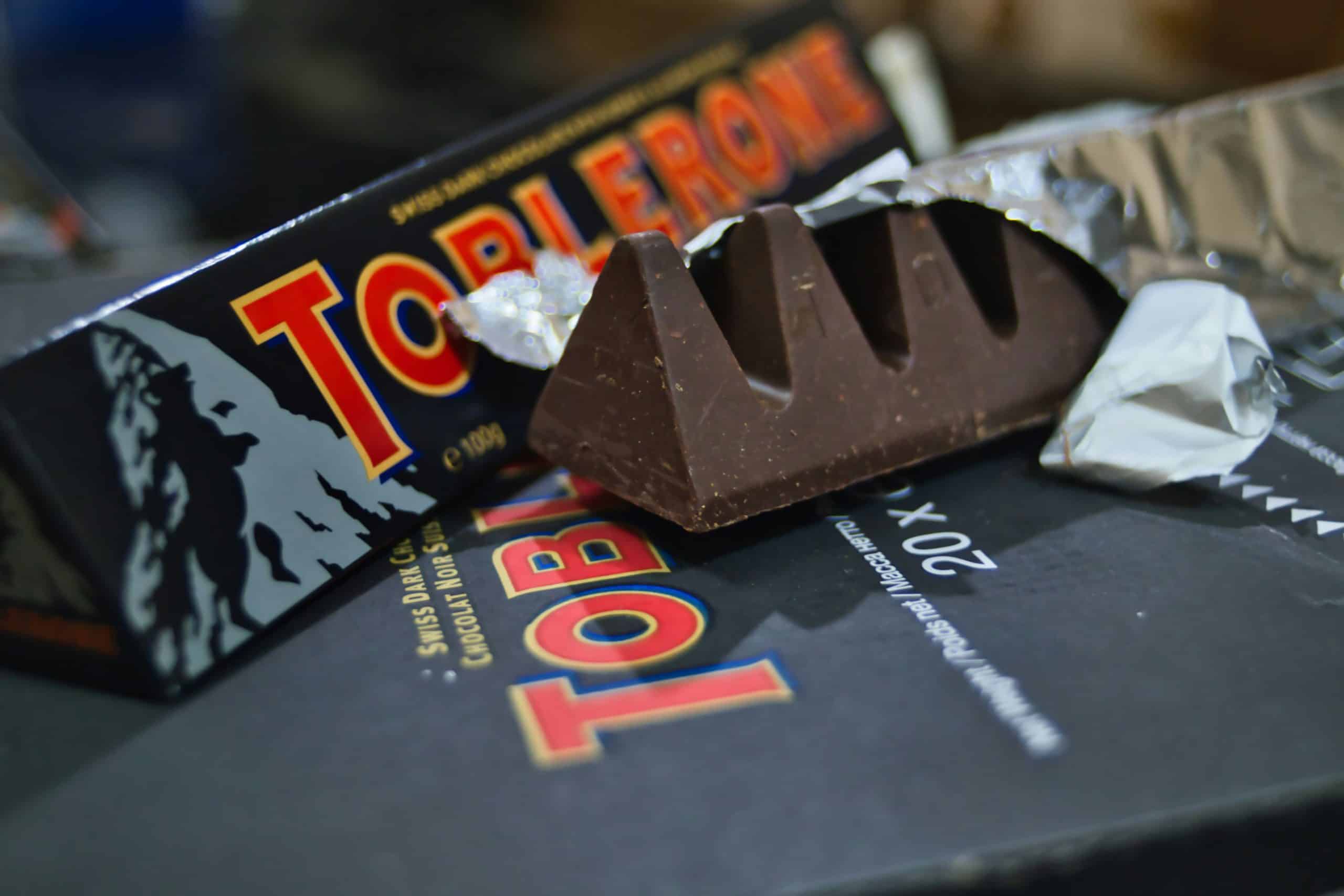
Even a chocolate bar’s shape can be trade marked. | Photo Credits: Safwan (Unsplash)
- Even famous brands can lose the fight — in the US the brand “escalator,” was cancelled in 1950 after the word became generic.

The word that lost its trade mark. | Photo Credits: Leire Cavia (Unsplash)
Australians are filing more trade marks than ever — IP Australia recorded a record 97,345 trade mark applications in 2025 alone!


Further Reading
Don’t Skip the Trade Mark Search: Lessons from the “ZIP” Case
https://sharongivoni.com.au/dont-skip-the-trade-mark-search-lessons-from-the-zip-case/
Top 10 Trade Mark Mistakes Aussie Businesses Make (And How to Avoid Them)
https://sharongivoni.com.au/top-10-trade-mark-mistakes-aussie-businesses-make-and-how-to-avoid-them/
David vs Goliath: Trade mark battle with ZARA
https://sharongivoni.com.au/david-vs-goliath-trade-mark-battle-with-zara/
Filing your own trade mark – things can go wrong
https://sharongivoni.com.au/filing-your-own-trade-mark-things-can-go-wrong/
Navigating Legal Aspects of Creative Business Rebranding
https://sharongivoni.com.au/navigating-legal-aspects-of-creative-business-rebranding/
Distinctive vs Descriptive: Naming Your Brand the Smart Way
https://sharongivoni.com.au/distinctive-vs-descriptive-naming-your-brand-the-smart-way/
Please note the above article is general in nature and does not constitute legal advice.
Please email us info@iplegal.com.au if you need legal advice about your brand or another legal matter in this area generally.