





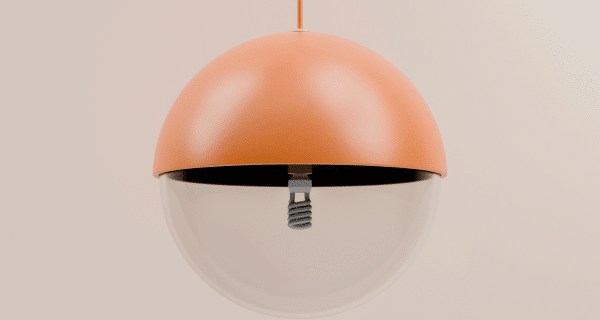

Credit : Alex Shuper
Ripped Off and Replicated: How do you protect your designs?
What designers need to know about copycat products
If you’re a designer in Australia, chances are you’ve already met your first replica. Maybe it was a “dupe” of your hero’s lamp on a big‑box website, or worse, a copy of your own work turning up in a project you didn’t even know about. It feels personal – and it is. But the law looks at replicas in a very particular way, and understanding that can help you protect yourself much more effectively.
Are replicas always illegal in Australia?
No. There is no general ban on replicas in Australia. The key questions are:
- Is the original design still legally protected (by copyright or a registered design)?
- Does the copy take a substantial part of that protected design, or is it just “inspired by” at a distance?
That’s why you see so many knock‑offs of classic chairs and lamps: often the original design rights have expired after their maximum term, so replicas are legal in IP terms, even if they feel morally wrong.
Where businesses do get into trouble is when they:
- copy a design that’s still protected, or
- market a replica in a way that misleads customers into thinking it’s the real thing or officially endorsed.
Copyright vs registered designs: what’s the difference?
For products like furniture, lighting, fashion and jewellery, Australian law uses two main systems: copyright and design registration.
Copyright protects artistic works – drawings, sculptures, certain high‑end, handcrafted pieces. It arises automatically; you don’t file for it.
Registered designs (through IP Australia) protect the appearance of a product – its shape, configuration, pattern or ornamentation – for up to 10 years.
For many three‑dimensional products that are made and sold in quantity, design registration is the more reliable tool. If you register and then certify your design, you get a monopoly over that look for up to a decade, and it’s much easier to stop copycats.
If you don’t register and your design becomes a commercial success, you may find there is very little you can do when cheaper copies start appearing.

Jewellery designers can protect their creations in Australia as registered designs
What about fashion and jewellery?
Fashion and jewellery live in a tricky space.
Many garments and accessories are treated as functional, mass‑produced products, which makes copyright protection patchy.
Jewellery might be protected by copyright if it qualifies as a work of artistic craftsmanship (for example, a highly handcrafted, sculptural piece), but mass‑produced collections usually need design registration instead.
Registered designs can work very well for:
- signature jewellery ranges
- distinctive shoe or bag shapes
- recurring motifs applied across products (combined with trade marks for the brand).
Again, the pattern is the same: register early, or risk having no real leverage when copycats arrive.
The myth of the “10 per cent rule”
Designers are constantly told “change it by 10% and you’re safe”. There is no “10 per cent rule” in Australian law.
Courts look at whether the overall impression of the copy is substantially similar, not whether a few measurements or details have been nudged.
This matters for you because:
- small tweaks to your design won’t ‘lose’ your rights
- equally, small tweaks by a copier won’t necessarily save them if the piece still looks very close to yours.

Ripped Off and Replicated: Bag designers can stop copycats and safeguard their designs in Australia
Where do trade marks fit in?
Trade marks don’t protect the shape of your lamp, chair or necklace – they protect the signs that tell people it’s yours: names, logos, taglines and other brand identifiers.
Used well, trade marks can do a lot of heavy lifting around replicas. They can stop others from using your brand or product names on their lookalikes, even if the physical design is only slightly tweaked. They also help you prevent marketing that suggests a fake is your genuine piece – for example, when someone uses your label name or a confusingly similar logo alongside a copycat product.
Because trade marks live in the “brand space”, they’re powerful when replicas are sold online or promoted on social media. They give you a way to challenge product listings, ads and packaging that misuse your brand, even where the underlying design might be harder to protect. They also support consumer‑law arguments: if someone is using your branding (or something deceptively close) in a way that misleads buyers into thinking their replica is “yours”, your trade mark rights and Australian Consumer Law can often be run together.
Think of this as a layered approach: design registration to protect the look and shape, trade marks to protect the brand and product names, and contracts and labelling to control how your work is used, sold and presented in the market. When those layers are planned together from the start of a collection, you’re in a much stronger position if – or when – the copycats appear.
So, used well, trade marks can:
- stop others using your brand or product names on their lookalikes
- prevent marketing that suggests a fake is your genuine piece
- support consumer‑law claims if someone is passing off a replica as “yours”.
Think of this as a layered approach: design registration to protect the look, trade marks to protect the brand, contracts and labelling to control how your work is used and sold.
What can designers do in practice?
For furniture, lighting, fashion and jewellery designers worried about being ripped off, a practical checklist looks like this:
- Register key designs with IP Australia before, or within 12 months of, first showing them in public (thanks to the new design grace period).
- Secure your brand with trade mark registrations for your label and signature collection names.
- Use clear contracts with manufacturers, collaborators and stockists so you don’t accidentally sign away rights in your own designs.
- Watch the market – online platforms, catalogues, trade shows – and keep screenshots if you spot suspiciously similar products.
- Act quickly but strategically – a well‑timed letter or negotiated outcome often makes more sense than jumping straight into court.
- You can’t stop every copy, but with the right registrations and paperwork you can deal with the serious ones from a position of strength.
For most designers, the hardest part is knowing which rights to use when – and that’s exactly where getting proper legal advice makes a real difference.
We can look at your collection as a whole and work out the right mix of design registrations, trade marks, copyright and contracts, instead of you guessing and hoping you’ve ticked the right boxes.
Further reading
Arts Law Centre of Australia – Protecting your designs
https://www.artslaw.com.au/information-sheet/protecting-your-designs/
Arts Law Centre of Australia – Fashion and textiles – for artists and designers
https://www.artslaw.com.au/information-sheet/fashion-textiles/
Is Replica Furniture Legal in Australia?
https://sharongivoni.com.au/replica-furniture-is-it-legal/
Legal Protection for Jewellery Designs
https://sharongivoni.com.au/legal-protection-for-jewellery-designs/
Protecting Furniture Designs in Australia – Register or Lose It!
https://sharongivoni.com.au/register-or-lose-it-still-protecting-your-furniture-designs-in-australia-in-2026/
Beware of Hidden Traps in Trading Terms and Conditions: A Legal Guide for Furniture Designers
https://sharongivoni.com.au/beware-of-hidden-traps-in-trading-terms-and-conditions-a-legal-guide-for-furniture-designers/
Quick Design Tips
- You can show a design and still register it within 12 months.
- A registered design can protect you for up to 10 years.
- Copyright can last decades but often doesn’t cover mass‑produced products.
- Registering a design can limit how copyright helps for that product.
- There is no “10 per cent rule” in the law.
- Trade marks protect your brand name and logo, not the shape.
- When design rights expire, copying the look may be legal but faking the brand is not.
- Big jewellery and design brands often register key designs; many small designers don’t.
- A registered design lets you control who makes, imports and sells that look in Australia.
- Industry groups are pushing for stronger anti‑replica rules, so the current tools still matter.
Please note the above article is general in nature and does not constitute legal advice.
Please email us info@iplegal.com.au if you need legal advice about your brand or another legal matter in this area generally.