





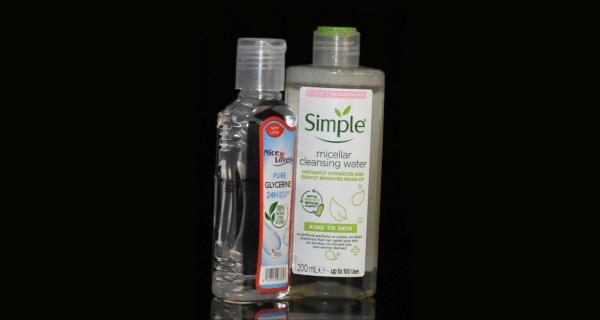

Credit: thisguyshoots (unsplash)
Inspiration… or Rip Off?
When Does Inspiration Become Copying in Branding, Packaging and Product Design?
There is an old saying that there are no completely original ideas. Designers, artists, marketers and business owners are constantly influenced by what they see around them. Inspiration can come from a competitor’s packaging, a trending social media campaign, a famous artwork, a popular product or even a viral TikTok video.
The challenge is knowing when inspiration crosses the line into copying.
In today’s world, that question is more important than ever. Businesses compete in crowded markets where packaging, branding and visual presentation can be just as important as the product itself. At the same time, social media allows trends to spread almost instantly, while artificial intelligence can generate logos, packaging concepts and marketing materials in a matter of seconds.
This has led to an increase in what are often called “dupes”, “lookalikes” or “copycat products”. These products may not directly copy a competitor’s logo or brand name, but they often borrow heavily from the overall look and feel of a successful product.
The legal question is: when does that become a problem?
Why Copycat Packaging Makes Headlines
One of the biggest intellectual property stories in Australia in recent years involved Aldi and the popular Baby Bellies snack products.
For years, copycat packaging claims have usually been brought under the Australian Consumer Law for misleading or deceptive conduct or through the common law action of passing off. Historically, these claims have often been difficult to win because courts generally require evidence that consumers are likely to be confused about the source of the products.
However, the Federal Court’s decision in Hampden Holdings I.P. Pty Ltd v Aldi Foods Pty Ltd [2024] FCA 1452 took a different approach. Instead of focusing solely on consumer confusion, the case was argued as a copyright infringement claim relating to the artistic works embodied in the packaging design.
The court said Aldi crossed the line from “inspired by” to actually copying key creative elements of the Baby Bellies packaging, so it was a copyright issue, not just look‑alike marketing.
Instead of asking whether shoppers would be confused (the usual ACL/passing off test), the court focused on whether Aldi had copied a substantial part of the Baby Bellies artwork on the packs. It looked at the overall combination of design features – the childlike character with a big round belly, the white background, playful font, two‑column layout, product and ingredient images stacked on one side, and the age badge in the top corner – and found Aldi’s Mamia packs followed that same “recipe” too closely. The judge was influenced by evidence that Aldi’s designers were told to emulate the Baby Bellies packaging, which showed this was deliberate copying rather than coincidence.
The question of substantial part said the court is qualitative rather than quantitative: there is no fixed number of shared or copied elements that will amount to copyright infringement, but the number and significance of shared layout and design elements can be relevant to that qualitative assessment.
The decision attracted significant media attention because it not only gives brand owners another weapon in the fight against copycat packaging, but also highlights that copyright – not just consumer law and passing off – can be a powerful way to challenge look‑alike products.

This image is a simplified recreation prepared for illustrative purposes only. It is not a photograph of the actual products
Why This Case Matters
The decision is important because it reminds businesses that intellectual property rights extend beyond logos and trade marks.
Packaging can involve copyright.
Product shapes may be protected through registered designs.
Brand names and logos can be protected through trade marks.
In some cases, businesses may also rely on the Australian Consumer Law, particularly sections 18 and 29 of the Australian Consumer Law, which prohibit misleading or deceptive conduct and false or misleading representations.
Increasingly, successful brand protection strategies involve multiple layers of protection rather than relying on a single legal right – and this is exactly where Sharon Givoni Consulting can step in to work with you to design and implement a tailored, multi‑layered brand protection plan.
Social Media and its impact
Social media has fundamentally changed how brands are built and copied.
In the past, a product might take years to become widely recognised. Today, a product can go viral overnight.
A distinctive package design, colour scheme or product presentation may be shared thousands of times across Instagram, TikTok, Facebook and YouTube. Consumers often become familiar with the visual identity of a product before they ever purchase it.
The downside is that copycats can move just as quickly.
A successful product launch may inspire competitors to create products with similar colours, layouts, imagery or aesthetics in an attempt to capitalise on the popularity of the original. Sometimes this is lawful competition. Sometimes it is not.
As brands increasingly live online, businesses need to think carefully about how they protect not only their products but also their visual identity.
What About AI?
Businesses can now use AI tools to generate packaging concepts, logos, advertising campaigns and branding materials in minutes. While this can be incredibly useful, don’t forget that it can create new risks as well.
AI-generated content may inadvertently resemble existing packaging, designs or branding. A business may genuinely believe a design is original only to discover that it bears a striking resemblance to another company’s intellectual property.
AI also makes it easier for competitors to analyse successful products and rapidly create lookalike concepts.
So Where Is the Line?
As any lawyer can tell you there really is no one simple formula. The law attempts to strike a balance between encouraging competition and protecting creativity. Businesses are generally free to take inspiration from trends, market developments and successful products. What they cannot do is appropriate another person’s intellectual property rights.
That assessment is often highly fact-specific:
- A similar idea may be perfectly lawful.
- A similar expression of that idea may not be.
That is why intellectual property disputes are rarely black and white.
Practical Tip
If your marketing team says, “We want something that looks just like that successful product, but slightly different,” it may be time to pause and seek legal advice. The cost of reviewing packaging before launch is often far less than the cost of defending an intellectual property dispute later.

Credit: Nathalia Rosa (unsplash)
How Sharon Givoni Consulting Can Assist
At Sharon Givoni Consulting, we assist businesses to identify, protect and enforce their intellectual property rights before problems arise. Depending on the circumstances, this may involve trade mark registrations, copyright advice, design registrations, brand protection strategies and advice on packaging, advertising and marketing campaigns.
We also assist businesses that believe a competitor has copied their packaging, branding, products or creative materials, as well as businesses that have received allegations of infringement and need practical advice on their options.
Because intellectual property law is often nuanced and highly fact-specific, obtaining advice early can help businesses avoid costly disputes, rebrands and enforcement action later. In many cases, a relatively small investment at the outset can save significant time, expense and stress down the track.
Copycat Packaging Red Flags: Is Your Brand at Risk?
- Before launching new packaging, ask yourself these questions:
- Could a customer mistake your product for a competitor’s at first glance?
- Are you using similar colours, fonts, illustrations or layouts to a well-known brand?
- Would someone looking at the products side-by-side immediately notice the difference?
- Have you used AI to create packaging without checking whether it resembles an existing product?
- Have you checked whether copyright, trade mark or design rights might apply?
- Remember, courts do not simply look at individual elements in isolation. They often assess the overall impression created by the packaging. A different logo may not be enough if the overall design closely resembles another product.
Further Reading
Hampden Holdings I.P. Pty Ltd v Aldi Foods Pty Ltd [2024] FCA 1452
https://www.austlii.edu.au/cgi-bin/viewdoc/au/cases/cth/FCA/2024/1452.html
Copyright and Packaging Design: What Businesses Need to Know
Sharon Givoni
https://www.sharongivoni.com.au/
Trade Marks in Australia: What Every Business Owner Needs to Know
Sharon Givoni
https://www.sharongivoni.com.au/
Understanding Copyright
Copyright Council of Australia
https://copyright.org.au/
Trade Marks – Understanding Trade Marks
IP Australia
https://www.ipaustralia.gov.au/trade-marks/understanding-trade-marks
Please note the above article is general in nature and does not constitute legal advice.
Please email us info@iplegal.com.au if you need legal advice about your brand or another legal matter in this area generally.