





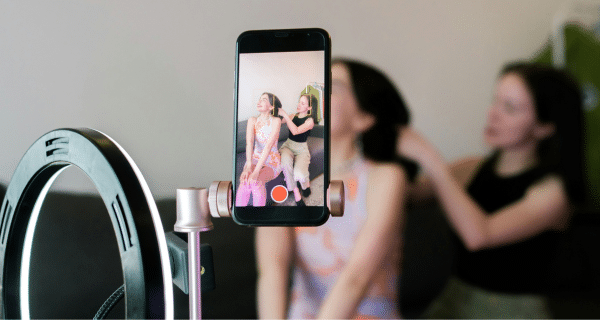

Photo by Oleg Ivanov on Unsplash
What PhotobookShop and Hismile tell Australian brands and influencers
Influencer marketing can look wonderfully informal. Someone loves a moisturiser, wears a dress, visits a restaurant or opens a beautifully packaged gift on Instagram. They tell their followers about it. Everyone moves on.
Legally, however, things can become complicated surprisingly quickly.
Was the product really a gift? Was the influencer required to post about it? Did the brand approve the post? Was the review edited? Does #gifted tell consumers enough? And who is responsible if the overall impression is misleading — the influencer, the brand, the agency, or all three?
The Australian Competition and Consumer Commission (ACCC) has been paying increasing attention to exactly these questions, and in 2026 it began issuing penalties.
What does the law actually say?
There is no single Australian “Influencer Act”. Instead, influencer marketing sits within existing laws — most importantly the Australian Consumer Law, which is Schedule 2 to the Competition and Consumer Act 2010 (Cth).
The big provision is section 18 of the Australian Consumer Law. It prohibits a person, in trade or commerce, from engaging in conduct that is misleading or deceptive, or likely to mislead or deceive.
Then there is section 29 of the Australian Consumer Law. It deals with particular false or misleading representations about goods and services. Importantly for influencers, it expressly covers representations involving testimonials, as well as representations about sponsorship, approval, benefits and affiliations.
That means the legal question is not necessarily solved by adding “#ad” somewhere to a post. The whole impression matters. What does an ordinary consumer understand they are looking at? An independent recommendation? A paid advertisement? An honest review? Something in between?
That distinction has become very real.
PhotobookShop: when a “gift” isn’t just a gift
In March 2026, the ACCC announced that Tomsem Consolidated Pty Ltd, trading as PhotobookShop, had paid $39,600 in penalties after the ACCC issued two infringement notices concerning influencer reviews posted on Instagram.
It was reported as the first time an Australian business had been penalised for failing to disclose paid influencer content.thewest.com
According to the ACCC’s media release, PhotobookShop pays penalties for influencer reviews, between August 2024 and September 2025 PhotobookShop commissioned influencers to produce social-media reviews. On 107 occasions, it instructed influencers not to disclose that they had received free PhotobookShop products in return for creating the review. Those products were worth approximately $50 to $400 accc.gov
The ACCC alleged that one resulting Instagram review gave consumers the impression that it was an organic, unpaid review when the influencer had actually been commissioned and given the product for free.
That is an important reminder that “payment” is not necessarily a cheque or a bank transfer. Free products and services can matter too.
Just as significantly, the ACCC’s investigation did not begin with a consumer complaint. It began with an influencer. She was presented with a written agreement asking her not to disclose that she had been gifted a photobook in exchange for a review, and she reported it to the regulator.
Did you know?
The ACCC’s PhotobookShop investigation began because an influencer refused to stay quiet. She was asked to sign an agreement requesting that she not disclose her gifted photobook, and she reported it to the ACCC instead. The result was the first Australian penalty for undisclosed paid influencer content. The clause a brand puts in its own contract can become the evidence against it.
There was another interesting part to the PhotobookShop matter.
PhotobookShop had commissioned an influencer to review a hard-cover photobook. The influencer said that its AI assistant was “a bit fiddly” and “a bit confusing”, while ultimately saying she was happy with the photobook. PhotobookShop edited out those criticisms before publishing the review, without disclosing that substantive edits had been made. The ACCC alleged that this changed the overall impression and made the review appear more favourable.
There is an important legal qualification here: payment of an infringement-notice penalty is not an admission that the Australian Consumer Law was contravened. The ACCC itself makes that clear, and PhotobookShop made no such admission.
But for brands, agencies and influencers, the message is nevertheless worth noticing. Disclosure is only one part of the problem. What happens to the content after the influencer creates it can matter too.
Hismile: when the “customer” works for you
Another 2026 ACCC matter shows how blurry social-media advertising can become.
In June 2026, in Hismile pays penalties for false and misleading social media videos, the ACCC announced that Hismile Pty Ltd had paid $138,600 in penalties after receiving seven infringement notices concerning false and misleading representations in social-media advertising.
The videos appeared to show random members of the public trying Hismile products and reacting positively. The problem identified by the ACCC was that the supposedly random shoppers were actually Hismile employees.
Unlike PhotobookShop, Hismile admitted the conduct. The ACCC recorded that Hismile admitted its conduct in posting the videos to social media was, or was likely, misleading, in breach of the Australian Consumer Law.
The ACCC also raised a second and quite separate concern. Hismile had uploaded videos of its Glostik Tooth Gloss product which may have given consumers the impression that the product would remove stains from teeth, when the product only temporarily concealed them.
That point deserves emphasis, because it is not about disclosure at all. Even a perfectly labelled advertisement breaches the law if what it says about the product is not true.
Hismile also provided a court-enforceable undertaking, which included implementing a competition and consumer law compliance program and an agreement not to represent its staff as random members of the public providing testimonials, reviews or commentary about Hismile products.
An infringement notice is not a court judgment finding liability. But these matters illustrate a broader point: social media’s deliberately casual style does not switch off the Australian Consumer Law.
The ACCC has already been watching influencers
This did not begin in 2026.
In 2023, the ACCC conducted its first dedicated social-media influencer sweep. It ran from 23 January to 3 February 2023 and reviewed 118 individual influencer accounts across eight sectors, including fashion, beauty and cosmetics, travel and lifestyle, health, fitness and wellbeing, home and parenting, food and beverage, and gaming and technology. The findings were published in December 2023.
The results were striking. The ACCC reported that 81 per cent of the influencers reviewed were making posts that raised concerns under the Australian Consumer Law for potentially misleading advertising, and that the most common issue was influencers not disclosing brand relationships in their posts.
No sector escaped. Fashion influencers fared worst, with 96 per cent of those reviewed making concerning posts, while gaming and technology was the lowest at 73 per cent.
The ACCC’s full Social media influencer testimonials and endorsements report is useful reading for anyone involved in influencer campaigns.
And then there are the industry codes
The legislation is not the whole story.
The ACCC itself points businesses and influencers to the Australian Association of National Advertisers Code of Ethics, which requires advertising to be clearly distinguishable as advertising, and the Australian Influencer Marketing Council (AiMCO) Code of Practice, which addresses good practice in influencer marketing, including disclosure. AiMCO established its Influencer Marketing Code of Practice in July 2020 and describes it as the first of its kind in the world (AiMCO).
Overseas regulators are grappling with similar issues. The United States Federal Trade Commission’s Endorsement Guides and influencer resources address “material connections” between influencers and brands, including money, free products and other relationships. The FTC’s guidance stresses that disclosure should be clear and conspicuous rather than hidden somewhere followers are unlikely to see it.
In the UK, the Advertising Standards Authority and Committee of Advertising Practice influencer guidance similarly deals with identifying advertising, affiliate marketing and making advertising obvious to consumers.
These overseas rules do not replace Australian law, but they show the direction in which regulation of influencer marketing is developing.
Overseas regulators are grappling with similar issues. The United States Federal Trade Commission’s Endorsement Guides and influencer resources address “material connections” between influencers and brands, including money, free products and other relationships. The FTC’s guidance stresses that disclosure should be clear and conspicuous rather than hidden somewhere followers are unlikely to see it.
In the UK, the Advertising Standards Authority and Committee of Advertising Practice influencer guidance similarly deals with identifying advertising, affiliate marketing and making advertising obvious to consumers.
These overseas rules do not replace Australian law, but they show the direction in which regulation of influencer marketing is developing.
The difficult bit is often the grey area
The obvious advertisement is usually the easy one.
The harder questions arise when an influencer genuinely likes a product but received it free. Or has an ongoing relationship with the brand. Or is paid an affiliate commission. Or posts something months after a formal campaign ended. Or the brand wants to edit an influencer’s review. Or an agency sits between the two.
Then there are entirely separate questions about copyright, trade marks and ownership of the content. Can the brand repost the photograph? Put it on its website? Edit it? Use it in paid advertising? Keep using it after the influencer relationship ends?
The answers can depend heavily on the particular facts and, importantly, on the contract.
Five questions to ask before you post
- Was anything of value received, including free product, travel, discounts or affiliate commission?
- Is the disclosure visible immediately, without the viewer tapping “more” or scrolling through hashtags?
- Has anyone edited the creator’s words, and would the edits change the overall impression?
- Are the people on camera who they appear to be, or are they staff, family or paid actors?
- Who owns and may keep using the content next month, next year, and after the relationship ends?
Why have it reviewed before you post?
The tempting approach is to publish first and worry about the paperwork later. Unfortunately, once a campaign is live, the legal problem may already exist.
A properly drafted influencer agreement can deal with matters such as disclosure obligations, approval processes, ownership and licensing of content, use of music and third-party material, editing rights, exclusivity, duration, payment, gifted products, termination and what happens to content when the relationship ends.
But there is no universal clause or hashtag that makes every campaign compliant. What is appropriate for a fashion collaboration may be quite different from what is required for financial products, therapeutic goods, cosmetics or health claims.
That is why it is worth having the campaign, proposed posts and influencer agreement legally reviewed before they go live.
Frequently asked questions
Is #gifted enough in Australia?
Not necessarily. There is no magic hashtag. The test under section 18 of the Australian Consumer Law is the overall impression created for an ordinary consumer, so a disclosure buried in a block of hashtags, or wording a viewer may not understand as meaning “advertisement”, may not be sufficient.
Do influencers or brands get penalised?
The 2026 penalties were paid by the brands — PhotobookShop and Hismile. However, the Australian Consumer Law applies to any person acting in trade or commerce, which can include influencers and the agencies between them.
Can a brand edit an influencer’s review?
Editing is not automatically unlawful, but the PhotobookShop matter shows the risk. Removing criticism so that a review reads more favourably, without disclosing that substantive edits were made, can change the overall impression.
Does free product count as payment?
The ACCC treats gifted products and services as payment. In the PhotobookShop matter the gifted items were worth roughly $50 to $400.
What if the claim about the product is wrong, but the post is properly labelled as an ad?
It can still breach the law. The Glostik aspect of the Hismile matter concerned what the advertising said the product did, not whether it was identified as advertising.
Talk to us before somebody presses “Post”
At Sharon Givoni Consulting, we advise brands, businesses, agencies and content creators on influencer agreements, advertising, intellectual property and the Australian Consumer Law.
Sometimes a short legal review before somebody presses “Post” is considerably easier than explaining the post afterwards.
Turning Legalese into Legal Ease®
This article provides general information only and is not legal advice. Legal advice should be obtained for your particular circumstances.
Influencer marketing can look wonderfully informal. Someone loves a moisturiser, wears a dress, visits a restaurant or opens a beautifully packaged gift on Instagram. They tell their followers about it. Everyone moves on.
Legally, however, things can become complicated surprisingly quickly.
Was the product really a gift? Was the influencer required to post about it? Did the brand approve the post? Was the review edited? Does #gifted tell consumers enough? And who is responsible if the overall impression is misleading — the influencer, the brand, the agency, or all three?
The Australian Competition and Consumer Commission (ACCC) has been paying increasing attention to exactly these questions, and in 2026 it began issuing penalties.
Further Reading
Influencer Marketing and the Law: What Businesses Need to Know
https://sharongivoni.com.au/influencer-marketing-online-reviews-and-the-law/?utm_source=chatgpt.com
Australian Competition and Consumer Commission
PhotobookShop pays penalties for influencer reviews — ACCC, 24 March 2026
https://www.accc.gov.au/media-release/photobookshop-pays-penalties-for-influencer-reviews?utm_source=chatgpt.com
Social media influencer testimonials and endorsements — Full ACCC Report (PDF)
https://www.accc.gov.au/system/files/social-media-influencer-testimonials.pdf?utm_source=chatgpt.com
Online reviews and testimonials internet sweep report — Australian Competition and Consumer Commission, 7 December 2023
https://www.accc.gov.au/about-us/publications/online-reviews-and-testimonials-internet-sweep-report?utm_source=chatgpt.com
Competition and Consumer Act 2010 (Cth), Schedule 2 — Australian Consumer Law
https://www.legislation.gov.au/C2004A00109/latest/text

Influencer marketing may look casual, but the law is not. Brands and content creators need to consider disclosure, testimonials and the overall impression a social media post gives consumers. Photo: Daiga Ellaby/Unsplash.
Please note the above article is general in nature and does not constitute legal advice.
Please email us info@iplegal.com.au if you need legal advice about your brand or another legal matter in this area generally.