





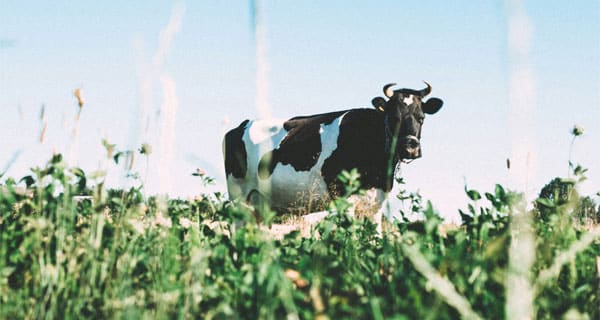

Credit: Angelina Litvin (Unsplash)
If It Didn’t Come From a Cow… Can It Still Be “Milk”?
Plant-based alternatives, dairy language and legal boundaries
Walk into any supermarket today and the dairy aisle tells a very modern story.
Almond milk. Oat milk. Coconut yoghurt. Plant-based cheese.
But pause for a moment.
If it didn’t come from a cow… can it really be called “milk”?
It’s a simple question. But legally, it’s anything but simple — and for dairy businesses, it’s becoming more important by the day.
What does “milk” actually mean in law?
In Australia, “milk” isn’t just a casual word — it has a defined legal meaning under the Food Standards Code. It refers to the mammary secretion of milking animals.
So at a technical level, milk is dairy.
But here’s where things get interesting.
You’ve likely seen “almond milk” or “oat milk” everywhere — and they’re not disappearing anytime soon. That’s because the law doesn’t operate in a vacuum. It looks at how consumers actually understand words in context.
And that’s where the tension sits.
So… are plant-based “milks” actually allowed?
The short answer: yes — but only up to a point.
In Australia, plant-based products often rely on qualifiers like “almond”, “soy” or “oat” to signal that they are not dairy. That distinction is critical.
But the legal question is not just about the word itself. It’s about the overall impression created.
And that’s where many businesses get it wrong.
What does the law really care about?
This is where the Australian Consumer Law (ACL) comes into sharp focus.
The key rule is simple in theory: You must not mislead or deceive.
But in practice, it’s far more nuanced.
The law asks:
- What would an ordinary consumer think this product is?
- What impression is created at a glance?
- Are you borrowing credibility from dairy without earning it?
Because under the ACL, it’s not just about what you say — it’s about what people take away.
What regulators actually look at
When assessing risk, regulators look at the overall impression, including:
- Product name
- Packaging and colours
- Imagery (e.g. cows, farms, dairy cues)
- Shelf placement
- Nutritional claims (protein, calcium, “natural”)
- Marketing context
Is this just about wording — or something bigger?
This isn’t just a labelling debate. It’s about market positioning and trust.
Dairy products have spent decades building associations with:
- nutrition
- protein
- calcium
- wholesomeness
Plant-based products are now competing in that same space — sometimes borrowing that language.
And that raises a real legal question:
- Are consumers choosing these products because they understand them… or because they feel like dairy?
- Where do businesses start to cross the line?
Interestingly, risk rarely comes from using the word “milk” alone.
It comes from everything around it.
For example:
- Are you implying your product is nutritionally equivalent to dairy?
- Are your visuals designed to mimic traditional dairy branding?
- Are your claims properly substantiated?
Because even if each individual element seems harmless, together they can create a misleading impression.
High-risk claims to watch
Be careful with:
- “Same as dairy” or “just like milk”
- Protein equivalence claims
- Calcium comparisons without context
- “Natural” or “pure” messaging
- Packaging that closely resembles dairy brands
What about “cheese” and “cream”? Are they different?
Yes — and this is where many businesses slip up.
Terms like “cheese” and “cream” are not just descriptive. They are regulated dairy foods with defined compositional standards.
So the issue is not only what consumers think — it’s also whether your product is being presented as something the law says it isn’t.
That adds another layer of legal risk.
Is the law settled — or still shifting?
This is not a static area.
The Australian Government is actively reviewing plant-based labelling, with funding, industry consultation and consumer research underway to ensure labels are clear and not misleading.
The rules are still evolving.
And what is acceptable today may not be acceptable tomorrow.
Why this matters for dairy businesses right now.
If you are in the dairy industry, this is not just theoretical.
It affects:
- how your competitors market their products
- how your brand is positioned on shelf
- how consumers compare your products
And importantly — whether there may be grounds to challenge misleading conduct.
Because the law doesn’t stop at compliance. It also creates opportunities to protect your market position.
So what should you be doing?
The key is not to panic — but to be strategic.
You need to understand:
- where the legal boundaries sit
- how your competitors are operating
- whether any claims cross the line
- how to position your own brand safely and effectively
Because in a crowded fridge, it’s not just about what your product is.
It’s about what consumers think it is — and whether that impression is legally defensible.

When everything looks like milk, it’s easy to see how consumers can get confused.
How we can help
At Sharon Givoni Consulting, we work with dairy and food businesses every day on:
- labelling and packaging compliance
- misleading and deceptive conduct risks
- brand positioning and trade marks
- responding to competitor conduct
- product claims and marketing strategy
We combine legal precision with commercial insight — because in this space, you need both.
Final thought
This is not just a debate about words.
It’s about clarity and trust.
And as the line between dairy and dairy-style products continues to blur, the real question is not:
“Can you use that word?”
But rather:
“Will it stand up when someone looks closely?”
The Key Laws That Apply to “Milk” in Australia
Food Standards Australia New Zealand (FSANZ) Code
Standard 2.5.1 – Milk
Defines “milk” as the mammary secretion of milking animals → A product sold simply as “milk” must meet this definition.
Standards for Dairy Products (e.g. cream, cheese, butter)
Set compositional requirements for regulated dairy foods
Australian Consumer Law (ACL) (Schedule 2, Competition and Consumer Act 2010 (Cth))
Section 18 – Misleading or deceptive conduct
Section 29 – False or misleading representations about goods
Further reading
The Truth About Vegan, Plant-Based and “Natural” Labels in Australia
https://sharongivoni.com.au/the-truth-about-vegan-plant-based-and-natural-labels-in-australia/
How Far Can You Take Dairy Claims?
https://sharongivoni.com.au/wp-content/uploads/2026/02/DIAA-DairyClaims-2010.pdf
Organic Claims: Legal Requirements for Food Labelling
https://sharongivoni.com.au/organic-claims-law-labelling-packaging/
A Dairy Brand by Any Other Name
https://sharongivoni.com.au/insights/
Plant-Based Alternative Product Labelling (Australian Government)
https://www.agriculture.gov.au/agriculture-land/farm-food-drought/food/plant-based-alternative-product-labelling
FSANZ: Consumer Understanding of Plant-Based Labelling
https://www.foodstandards.gov.au
ACCC: Misleading or Deceptive Conduct Guide
https://www.accc.gov.au
Australian Consumer Law Overview
https://consumerlaw.gov.au
Please note the above article is general in nature and does not constitute legal advice.
Please email us info@iplegal.com.au if you need legal advice about your brand or another legal matter in this area generally.