






Used under a Creative Commons Licence
How “Innocent” Accessories Sparked a Record Button Battery Penalty
Could Your Products Be the Next Button Battery Test Case?
Who needs to read this?
Directors and executives who sign off on products but don’t want a “cute” key ring turning into a $14 million headline.
Product, buying and merchandising teams choosing toys, novelties and gadgets that may quietly hide button batteries.
Compliance, legal and risk managers building systems so safety risks are spotted early, escalated fast and actually fixed.
Marketing and e‑commerce teams writing product pages and packaging that must warn clearly, not just sell cleverly.
Small business owners and start‑ups selling online who assume “I’m too small for the ACCC to notice” – until they do.
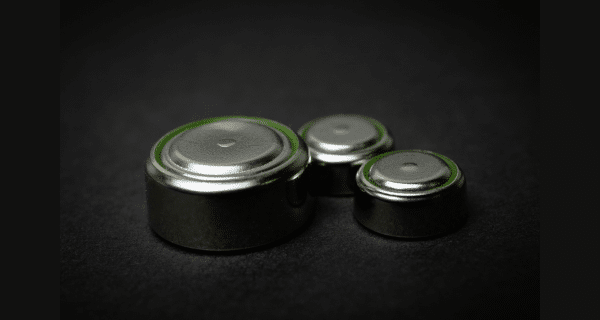
Businesses have batteries in all sorts of things – toys, digital notepads, light-up accessories, key rings, remote controls and novelties – and if it goes unchecked, a single non-compliant button battery can turn an “innocent” product into a life-threatening hazard. Button batteries are small, flat and shiny, easy for children to swallow or insert into ears and noses, and they can cause severe internal burns or death within hours. That combination of ubiquity and risk is exactly why Australia introduced mandatory button battery standards and why enforcement is now ramping up.
Why button battery laws came in – and what happened to kids
Australia’s mandatory button battery standards were introduced because a number of young children suffered very serious injuries and some tragically died after swallowing button batteries. When a button battery gets stuck in a child’s throat, it can burn through tissue, causing holes, bleeding and long‑term damage in a very short time, even if the child seems fine at first. Regulators also realised that many parents did not even know certain products contained button batteries, and that voluntary safety measures were not enough to keep kids safe, so they moved to strict, enforceable rules to make products safer and to require clear warnings.
In Australia, the main rules are the Consumer Goods (Products Containing Button/Coin Batteries) Safety Standard 2020 and the Consumer Goods (Products Containing Button/Coin Batteries) Information Standard 2020.
These standards have applied since 22 June 2022, after an 18‑month lead‑in to give businesses time to prepare, so regulators now expect full compliance. The safety standard deals with how products are built: battery compartments must be secure and child‑resistant, and products must be tested to show that children cannot easily open them. The information standard deals with what you tell consumers: any product containing button batteries must have clear safety warnings and instructions, including a direction to seek urgent medical help if a battery is swallowed or inserted, so parents know the risk is an emergency, not something to “wait and see”.
Enforcement of these standards sits with the ACCC at a national level, working together with state and territory consumer agencies such as NSW Fair Trading and Queensland’s Office of Fair Trading. These bodies check stores, test products, issue warnings, push for recalls and, when needed, take businesses to court for breaking the Australian Consumer Law.
The penalties can be very high, especially where many unsafe products are sold over a long period or where there is a serious risk to life; in the City Beach case, the Federal Court imposed a $14 million fine and made it clear that product safety penalties must not be seen as just another business cost. Even if products are cheap and no child has been harmed yet, repeated breaches of the button battery standards can still lead to multi‑million‑dollar consequences.
In that case, City Beach sold a range of novelty items such as toys, digital notepads, key rings, lights and light‑up Jibbitz accessories for Crocs shoes that contained button batteries and did not meet the mandatory safety and information standards.
Over roughly two years from June 2022 to October 2024, tens of thousands of non‑compliant products were supplied across over 60 product lines, many designed to appeal to children with bright colours and light‑up features.
Regulators had raised concerns and state agencies had issued warnings, but those issues were not consistently escalated to senior management and strong corrective action came late. The ACCC started court proceedings in April 2025, and City Beach eventually admitted it had kept selling non‑compliant goods, even after concerns and a recall.
Although no injuries were reported and the total profits from the products were relatively small, the Court still ordered a $14 million penalty because the company had exposed tens of thousands of children to potentially fatal risks, ignored mandatory standards over an extended period and showed what the Court described as “astonishing” ignorance of its obligations at senior levels.
For retailers, importers and brands, the City Beach decision is a loud warning siren.
The City Beach case makes it clear that even cheap, novelty products can lead to very serious trouble if button battery laws are ignored, even when no child has been hurt yet. Regulators and courts see this as a major safety failure, not a small technical mistake, because the potential harm to children is so severe.
The case also shows that businesses cannot just trust suppliers or rely on casual, informal checks. There needs to be a clear, written compliance system: policies everyone can follow, a clear path for raising safety concerns, regular product safety audits and proper oversight from the board and senior management. Directors and senior managers are expected to know which mandatory standards apply to their products and to build compliance into every stage of the product lifecycle – from sourcing and design through to packaging, marketing, sales and recall management. For any consumer-facing business, following the button battery standards is not only about avoiding large penalties and bad publicity; it is about proving that children’s safety genuinely comes first in product decisions.
Businesses have button batteries hidden in all sorts of things – from novelty key rings to light‑up toys – and if compliance goes unchecked, the risks can be catastrophic for children and extremely costly for brands.
The recent $14 million penalty imposed on City Beach shows that button battery safety is no longer a niche technical issue; it is a frontline governance, risk and compliance problem for every retailer, importer and supplier in Australia.
Other mandatory standards
Australian businesses face not just button battery rules but a growing list of mandatory product safety standards for toys, cots, bikes, sunglasses, electrical goods and more. Each has its own technical requirements, labelling rules and enforcement approach, and they are updated as technology and risks change, which makes it hard – especially for importers – to track what applies and to make sense of test reports and certificates.
Because of this, mandatory standards should be treated as a specialist risk area, not an afterthought. A structured compliance program, backed by legal advice, helps ensure product safety duties are properly understood, documented and actually followed across the business. For directors and senior executives, this is also key to showing due diligence and good governance, so if your products may be caught by mandatory standards – including button batteries – it is wise to get legal and regulatory guidance early, rather than waiting for a regulator or a recall to force your hand.
Cute as a Button or not so cute? How Sharon Givoni Consulting can help:
- Advise on how the Australian Consumer Law and mandatory product safety standards
- Review product designs, packaging, labelling, warnings and online product descriptions for compliance with button battery, consumer law and labelling requirements before products go to market.
- Conduct product safety and Australian Consumer Law compliance audits across your range
- Review advertising, social media content and promotions to ensure claims about safety, testing and compliance are not misleading or deceptive under the Australian Consumer Law.
- Map which other mandatory standards may apply to your products (for example, toys, clothing, electrical items or food‑related products)
- Provide ongoing legal support and “sounding board” advice as your product range evolves, new standards are introduced and enforcement priorities shift.
Further reading
ACCC – City Beach ordered to pay $14 million in penalties for supplying non‑compliant button battery products:
https://www.accc.gov.au/media-release/city-beach-ordered-to-pay-14-million-in-penalties-for-supplying-non-compliant-button-battery-products
ACCC Product Safety – Button batteries:
https://www.productsafety.gov.au/consumers/be-safe-around-the-home/safely-use-batteries-and-technology/button-batteries-guide
ACCC Product Safety – City Beach recalls:
https://www.productsafety.gov.au/search?query=city+beach&custom_action=/recalls
ACCC v Fewstone Pty Ltd (City Beach) – Concise Statement (Federal Court filing):
https://www.accc.gov.au/system/files/2025.04.02%20-%20Concise%20Statement.pdf
Consumer Goods (Products Containing Button/Coin Batteries) Safety Standard 2020:
https://www.legislation.gov.au/F2020L01656/latest/text
Consumer Goods (Products Containing Button/Coin Batteries) Information Standard 2020:
https://www.legislation.gov.au/F2020L01657/asmade/text
Please note the above article is general in nature and does not constitute legal advice.
Please email us info@iplegal.com.au if you need legal advice about your brand or another legal matter in this area generally.