






Used under a Creative Commons Licence
Granola – Ordinary Language or Protected Trademark in 2026?
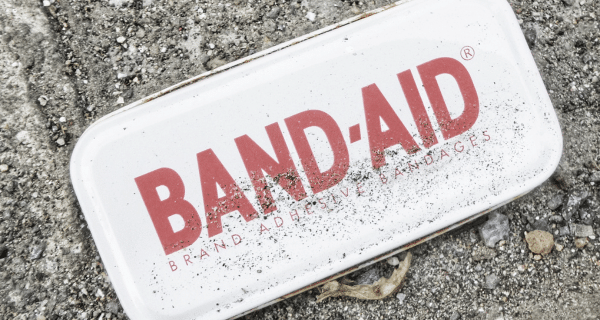
Ordinary language and trade marks have always had an uneasy relationship. “Band‑Aid”, “Esky”, “Google”, “Jaffas”, “Thermos”, “Twisties” – many started life as distinctive brands, only to slide towards becoming everyday shorthand for whole product categories. For Australian food and FMCG businesses, the question is now sharper than ever: when is a word just descriptive, and when is it still a protected badge of origin?
The GRANOLA case remains a useful cautionary tale, but recent trade mark decisions have also sharpened how courts think about ordinary words, reputation and consumer law, and what this means for brand strategy.
The GRANOLA decision – a quick refresher
Sanitarium had owned the Australian word mark GRANOLA since 1921 for breakfast cereal. It argued that in Australia GRANOLA had acquired a boutique, Sanitarium‑specific meaning, and sued Irrewarra Sourdough Bakery over “ALL NATURAL HANDMADE GRANOLA” on its packaging.
The Federal Court disagreed. The judge found that, by the time of the dispute, “granola” had entered Australian dictionaries and everyday language as a generic term for a type of toasted muesli and that Irrewarra was using it in that ordinary, descriptive way. Sanitarium could not stop others from using GRANOLA to describe that style of cereal, even with an old registration in its name.
The core lesson hasn’t changed: a word can start life as a distinctive trade mark but drift into generic use over time, to the point where enforcement becomes very difficult in practice.
Newer cases, same warning: don’t over‑claim ordinary words
Since the GRANOLA decision, Australian courts have continued to wrestle with the boundary between brand and ordinary language. Two themes stand out for food and FMCG trade marks:
Courts are wary of “monopolies” over common words
In recent trade mark and consumer law cases, higher courts have emphasised that the system is not meant to give brand owners permanent control over everyday terms, especially for common products. Brand owners must be able to distinguish their goods, but competitors still need vocabulary to describe what they sell.
Trade mark law and consumer law pull in different directions
One recent High Court decision confirmed that a sign can fail on strict trade mark infringement (for example, not “deceptively similar” under the Trade Marks Act), but still amount to misleading or deceptive conduct under the Australian Consumer Law if, in context, it trades too heavily on another brand’s reputation. That is important for slogans and descriptive marks: trade mark registration may be weak, but reputational evidence can still do work under consumer law.
Put together, these trends mean: you cannot assume that registering a descriptive or semi‑descriptive word will give you a long‑term monopoly, and you cannot ignore the risk of consumer law issues even if your mark is not especially strong on the register.
Could your brand become the next GRANOLA?
Many food brands deliberately choose words that feel everyday, natural or descriptive: “Protein Crunch”, “Clean Greens”, “Gut Glow”, “Granola”, “Protein Balls”, “Kombucha”, “Sourdough”, “Cold Brew”, “Plant‑Based Burgers”. Some are easy to get on the register; others are registrable only in stylised or composite form.
The GRANOLA litigation shows what can happen over time if:
- the word you have registered ends up in dictionaries and everyday speech as the category name; and
- competitors and the media increasingly use it generically without push‑back.
At that point, your ability to stop others using the same word descriptively will be limited, and courts may side with other traders who simply want to describe their product type.
Practical branding and trade mark tips for food businesses
The original GRANOLA article gave simple guidance about using trade marks as adjectives, not nouns. That remains best practice, and it is even more important now given how quickly language spreads online. Some practical points:
Pair your brand with a generic descriptor
Use “XYZ Granola cereal”, “ABC protein bar”, “DEF kombucha drink” rather than letting the brand stand alone as the product name. If you can remove the brand word and the sentence still makes sense, you are more likely to be using it correctly as an adjective.
Avoid encouraging generic use in your own marketing
Don’t invite consumers to “have a [BRAND] for breakfast” or “grab a [BRAND] at lunch” if [BRAND] is the only word they have for the product. Over time, that can train the market to treat your mark as the category label.
Signal trade mark status
Use the ™ or ® symbol consistently (where appropriate) alongside your brand, especially in more formal contexts like packaging, websites, trade materials and advertising. It is not magic, but it reminds others that this is a brand, not a generic term.
Watch how retailers and media use your brand
If supermarkets, influencers or journalists start using your brand as a shorthand for a category (“this café makes their own granola – not the [YOUR BRAND] stuff”), consider gentle correction and updated talking points so you don’t appear to accept generic use.
Choose brandable elements alongside descriptive words
Where you must use a descriptive word for regulatory or marketing reasons (for example, “granola”, “kombucha”, “plant‑based”), consider pairing it with a more distinctive brand element – an invented word, surname, or distinctive logo – and focus your trade mark strategy on that.
Examples of brands that fought genericide – and some that didn’t
Some brands have actively fought “genericide” (becoming generic) and managed to hold onto strong rights despite very widespread use:
ROLLERBLADE remains a registered brand for inline skates, with other traders pushed to adopt generic descriptions like “inline skates” instead.
BAND‑AID brand adhesive strips and KLEENEX tissues have used corrected advertising (“Band‑Aid brand adhesive bandages”, “Kleenex tissues”) to remind consumers and publishers that these are brands, not generic names.
In confectionery, Nestlé has maintained rights in marks like JAFFAS, prompting competitors to use more descriptive alternatives like “milk chocolate oranges”.
On the other hand, words like granola, escalator, cellophane and aspirin have gone the other way overseas – moving from brands to generic terms in some jurisdictions. The Australian GRANOLA case sits closer to that second group: a once‑registered word now widely treated as descriptive in ordinary speech.
What this means for your trade mark strategy
For Australian food and FMCG businesses, the GRANOLA story, together with more recent case law, suggests a few strategic points:
Think long term about distinctiveness
When choosing a core brand in a crowded category, ask not just “can we get this on the register today?”, but “will this still feel like a brand, not a product name, in ten years?” Distinctive, coined or semi‑abstract marks often age better than fashionable descriptive terms.
Use trade marks properly from day one
File trade mark applications early, but also set style guides and brand usage rules so that your own marketing doesn’t undermine your distinctiveness over time.
Treat descriptive words as part of a broader IP mix
If your key term is descriptive (like GRANOLA), expect that enforcement will be limited. Focus on protecting logos, distinctive get‑up (packaging trade dress), domain names and more distinctive sub‑brands that sit alongside the descriptive word.
Do not ignore consumer law
Even if a competitor carefully avoids infringing your registered mark, there can still be cases where their overall conduct – copycat look and feel, similar slogans, confusing packaging – misleads consumers about an association. Trade mark law and the Australian Consumer Law work together; advice should consider both.
Get advice early, not just when things go wrong
It is much easier to design a brand strategy that avoids GRANOLA‑style problems than to claw back distinctiveness after the word has gone generic in the marketplace. Early input from trade mark counsel can save expensive fights later.
Here is a concise further reading section you can drop in at the end of the GRANOLA piece.
Further Reading
Australian Health & Nutrition Association Ltd t/as Sanitarium Health Food Company v Irrewarra Estate Pty Ltd t/as Irrewarra Sourdough FCA 592
Full Federal Court decision outlining why “granola” was treated as a generic cereal term and Irrewarra’s “all natural handmade granola” was not use as a trade mark.
https://jade.io/summary/mnc/2012/FCA/592
Crunch time for Sanitarium in Granola trade mark dispute – King & Wood Mallesons IP Whiteboard
Practitioner commentary explaining Jagot J’s reasoning, including evidence of dictionary use and why “GRANOLA” could be descriptive despite being an invented word.
https://pulse.kwm.com/ip-whiteboard/crunch-time-for-sanitarium-in-granola-trade-mark-dispute/
Irrewarra’s granola trade mark battle – Irrewarra Granola
Brand‑side narrative from Irrewarra’s founders on receiving Sanitarium’s letters, running the case and what the decision has meant for granola producers in Australia.
https://irrewarra.com.au/irrewarra-granola-trademark-case
Please note the above article is general in nature and does not constitute legal advice.
Please email us info@iplegal.com.au if you need legal advice about your brand or another legal matter in this area generally.