






Photo by Maria Kozyr on Unsplash
Part 5 of 10 — Can you own the name of a drink in Australia?
WHO SHOULD READ THIS?
- Food and beverage manufacturers
- Alcoholic and non-alcoholic beverage brands
- Wineries, breweries and distilleries
- Restaurants, cafés and cocktail bars
- Food importers and distributors
- Branding agencies and packaging designers
- Entrepreneurs developing new food and beverage products
Picture this. You have developed a delicious new drink, perfected the recipe, commissioned beautiful packaging and persuaded a retailer to stock it. There is just one small ingredient you may have overlooked and that is: Trade mark law.
What if the name you have chosen for your drink belongs to someone else?
What we have found is that Australian trade mark law can serve up some rather unexpected surprises.
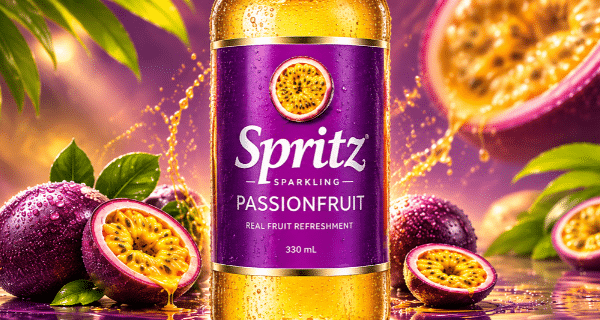
A recent Federal Court dispute involving the word SPRITZ illustrates why food and beverage businesses should think carefully about naming their products before investing in their launch.
A cocktail of legal complications – what happened with Bickford’s Australia?
Bickford’s Australia Pty Ltd has held an Australian trade mark registration for SPRITZ in relation to non-alcoholic soft drinks since 1993.
It has commenced proceedings against Noot Drinks Co Pty Ltd, alleging trade mark infringement in connection with the use of the names NEGRONI SPRITZ and LIMONCELLO SPRITZ. Among the issues in the case are whether Noot used those names as trade marks at all, rather than simply to describe the drinks, and, if so, whether they are deceptively similar to Bickford’s registered mark.
Noot came back at Bickfords and tried to cancel the SPRITZ registration altogether. (At the same time, Bickford’s is also defending the mark in a related dispute with Trink Tank, which sells non-alcoholic drinks under the Grupetto brand.)
In Bickford’s Australia Pty Ltd v Noot Drinks Co Pty Ltd (No 2) [2026] FCA 1456, the Federal Court considered whether expert reports prepared by bartender and venue owner Cara Devine could be admitted into evidence.
Justice O’Sullivan allowed the reports and overruled most of Bickford’s objections. He treated most of them as going to how much weight the evidence should be given, rather than whether it could be admitted at all. Interestingly, Noot was still ordered to pay Bickford’s costs of that application.
The parties made their closing submissions in October 2026. Bickford’s argued that descriptive words can still function as a trade mark when they are used to evoke a feeling or mood. At the time of writing, judgment has not been delivered.
Nevertheless, the case raises a fascinating question for the entire food and beverage industry: when does the name of a product become someone else’s intellectual property?
When the bartender becomes the expert
Who would have thought that a bartender’s professional experience could become relevant in a Federal Court trade mark dispute?
Yet that is precisely what makes the SPRITZ case so interesting. In considering how the word SPRITZ is understood and used in the beverage industry, the Court was asked to admit expert evidence from an experienced bartender, and largely allowed it over Bickford’s objections.
This brings us to an interesting aspect of Australian trade mark law: sometimes, understanding the legal significance of a word requires understanding the industry in which it is used.
Imagine a dispute over the name of a particular type of bread, cheese, coffee or cocktail.
Could the experience of a baker, cheesemaker, barista or bartender help establish whether that name is commonly used to describe a product? Could historical menus, recipe books, supermarket catalogues and even social media posts become relevant evidence?
For food and beverage businesses, this illustrates why the legal assessment of a product name can extend well beyond searching the Australian Trade Mark Register. The history of a word, its commercial use and how people understand it can all become relevant.
A beer, a coffee and a cocktail walk into a courtroom…
While the SPRITZ dispute is particularly topical, it is certainly not the first time Australian food and beverage businesses have found themselves in court over the words appearing on their packaging.
Two earlier Australian cases illustrate how differently these disputes can unfold.
A brewing dispute: When a beer name loses its protection
In Urban Alley Brewery Pty Ltd v La Sirène Pty Ltd [2020] FCAFC 186, two breweries became embroiled in a legal dispute involving the names URBAN ALE and URBAN PALE.
At the heart of the dispute was whether URBAN ALE was sufficiently distinctive to deserve trade mark protection. Ultimately, the registration was found to be invalid, with the descriptive significance of the words in the beer market playing an important role.
For food and beverage businesses, there is an important message here. Imagine spending years building a reputation around a product name, investing in packaging, advertising and distribution, only to discover that your trade mark registration is vulnerable to cancellation.
Could the very words that make your product attractive and immediately recognisable to consumers also make it difficult to protect legally?
The case illustrates why obtaining a trade mark registration and establishing legally defensible trade mark rights are not necessarily the same thing.
Grounds for argument: An Italian coffee with a different legal flavour
Interestingly, another food and beverage dispute produced a different outcome.
In Cantarella Bros Pty Limited v Modena Trading Pty Limited [2014] HCA 48, the dispute concerned two Italian words used in connection with coffee: ORO, meaning gold, and CINQUE STELLE, meaning five stars.
At first glance, these might appear to be ordinary expressions suggesting a premium-quality product. However, the High Court upheld the distinctiveness of the marks.
The legal analysis involved more than simply translating the words into English. Their ordinary significance to relevant Australian consumers was an important consideration.
This is particularly interesting for Australian food and beverage businesses, given our multicultural population and appetite for internationally inspired products.
From Italian coffee and French pastries to Middle Eastern spices and Japanese-inspired beverages, foreign-language words appear everywhere on Australian supermarket shelves.
But does choosing a foreign-language name make it easier to obtain trade mark protection? Could its growing popularity in Australia affect its distinctiveness? And what if other manufacturers already use the same expression overseas?
A little European sophistication on your packaging could come with some unexpected legal baggage.
What do these three disputes have in common?
Whether we are talking about beer, coffee or a spritz, the underlying issue is similar: where does ordinary product terminology end and exclusive trade mark protection begin?
The different outcomes in the beer and coffee cases demonstrate why businesses should be cautious about drawing conclusions based on what a word appears to mean.
For food and beverage manufacturers, the commercial consequences of getting this wrong can be considerable, particularly when thousands of labels have already been printed, products are sitting on supermarket shelves and a marketing campaign is well underway.
Your brand may be protected. But what about the names of your individual products?
Imagine you establish a beverage company called FIZZOPIA. You engage a designer, register your company name, obtain trade mark protection for your brand and begin developing an exciting range of beverages.
Your first three products are called Sunset Spritz, Botanical Bliss and Golden Tonic.
You might understandably assume that, having protected FIZZOPIA, the intellectual property side of your business is taken care of.
But what if one of those individual product names is already protected by another business? What if a competitor objects to the terminology appearing on your packaging?
The same questions can arise every time you introduce a seasonal flavour, launch a limited-edition product or collaborate with another brand.
This is an important distinction that food and beverage businesses sometimes overlook. Trade mark considerations do not necessarily end when the main brand is registered. They can arise throughout the life of a business as its product range grows and evolves.
Every new product launch can bring with it a new set of intellectual property considerations.
At Sharon Givoni Consulting, we encourage businesses to consider these issues early in the product development process, ideally before committing to packaging, printing and marketing expenditure.
After all, changing a product name while it is still on the drawing board is a very different commercial proposition from changing it after it has reached the supermarket shelves.
Food for Thought: Five Bite-Sized Trade Mark Facts
- SPRITZ has a surprisingly long trade mark history. Australian trade mark number 607675 has been registered since 26 July 1993 and covers non-alcoholic soft drinks in Class 32.
- Beer and soft drinks share a trade mark class. Class 32 generally covers beer and various non-alcoholic beverages.
- Wine and spirits have their own class. Class 33 generally covers alcoholic beverages other than beer.
- Coffee, chocolate and confectionery are legal neighbours. These products generally fall within Class 30 of the international trade mark classification system.
- A trade mark can potentially outlive its creator. Australian trade mark registrations can be renewed every 10 years, potentially indefinitely.
However, food and beverage trade mark protection involves considerably more than selecting the correct class. Questions of distinctiveness, ownership, conflicting registrations and the way a trade mark is actually used can all have significant commercial consequences.
The takeaway? A successful food or beverage product needs more than a winning recipe. It also needs a carefully considered intellectual property strategy.
What’s the law behind the label?
The Trade Marks Act 1995 (Cth) contains several provisions particularly relevant to food and beverage product naming:
- Section 17: What constitutes a trade mark?
- Section 41: Is the proposed trade mark sufficiently distinctive?
- Section 44: Does an earlier conflicting trade mark exist?
- Section 120: Has a registered trade mark been infringed?
- Section 122: Could a statutory defence, such as good-faith descriptive use, apply?
Businesses may also need to consider the Australian Consumer Law, in Schedule 2 of the Competition and Consumer Act 2010 (Cth), particularly where product names could mislead consumers.
Could you distinguish a potentially enforceable registration from one that might be vulnerable to challenge?
And would you know whether your proposed packaging changes the legal analysis?
These are precisely the sorts of issues where professional legal advice can make a difference.
How Sharon Givoni Consulting can help
At Sharon Givoni Consulting, we advise food and beverage businesses on trade mark protection, product naming, packaging, branding and intellectual property disputes.
We can assist with trade mark clearance, registration strategies, assessing potential infringement risks and responding to allegations from competitors.
Whether you are launching a new cocktail range, developing a non-alcoholic alternative or introducing a new flavour to an existing product line, getting legal advice before committing to packaging and marketing may help you avoid an expensive rebrand later.
After all, the only thing you want to be bitter about your new drink is its flavour — not the legal bill that comes with it.
Contact us at www.sharongivoni.com.au
Turning Legalese into Legal Ease®
Further Reading
Making Your Brand Stand (Distinctive not descriptive!):
https://sharongivoni.com.au/making-your-brand-stand-distinctive-not-descriptive/
Falling in love with your brand name (and why the law doesn’t always agree):
https://sharongivoni.com.au/falling-in-love-with-your-brand-name-and-why-the-law-doesnt-always-agree/
How to get your trade mark registered:
https://sharongivoni.com.au/word-mark-or-logo/
Food, Instagram & Food Labelling Law by Sharon Givoni:
https://sharongivoni.com.au/word-mark-or-logo/
Industry expert evidence admitted in Spritz dispute – Food & Drink Business:
https://www.foodanddrinkbusiness.com.au/news/industry-expert-evidence-admitted-in-spritz-dispute
Trade mark cancelled after Melbourne brewers’ legal battle – Australian Brews News:
https://brewsnews.com.au/trade-mark-cancelled-after-melbourne-brewers-legal-battle/
Bitter coffee war over Italian labels grinds up in High Court – Nine:
https://www.nine.com.au/australia-news/coffee-wars-grind-up-in-high-court-20140805-p5se27.html
- Food Law Series Part 1: Food Law 101: How Is Food Regulated in Australia?
https://sharongivoni.com.au/food-law-series-part-1-food-law-101/ - Food Law Series Part 2: Therapeutic Goods Law 101
https://sharongivoni.com.au/food-law-series-part-2-therapeutic-goods-law-101/ - Food Law Series Part 3: Food or Medicine? Where Is the Line?
https://sharongivoni.com.au/food-law-series-part-3-food-or-medicine - Food Law Series Part 4: Health Claims on Food: The Basics
https://sharongivoni.com.au/food-law-series-part-4-health-claims-on-food-the-basics/ - Food Law Series Part 6: May Contain Traces Of…”: The Allergen Warning That Isn’t Mandatory
https://sharongivoni.com.au/food-law-series-part-6-may-contain-traces-of-the-allergen-warning-that-isnt-mandatory - Food Law Series Part 7: Turning Legalese into Legal Ease
https://sharongivoni.com.au/food-law-series-part-7-turning-legalese-into-legal-ease - Food Law Series Part 8: Can You Really Call It Chocolate? Food Names With Legal Meanings
https://sharongivoni.com.au/food-law-series-part-8-can-you-really-call-it-chocolate-food-names-with-legal-meanings - Food Law Series Part 9: TBC
- Food Law Series Part 10: TBC
Please note the above article is general in nature and does not constitute legal advice.
Please email us info@iplegal.com.au if you need legal advice about your brand or another legal matter in this area generally.