






Credit: Christian Wiediger
Food & Drink Business Magazine – Can you replicate overseas products
This is an updated version of an old post, click here to see the original.
You Find a Great Product Overseas. Can You Copy It Here? Why, and Why Not?
Australian food and beverage businesses often draw inspiration from overseas products. You see a successful drink, snack or frozen meal on an overseas trip and wonder: can you copy the idea and even the brand name back home if it is not being sold here?
Two well‑known Federal Court decisions – involving Monster Energy drinks and Healthy Choice frozen meals – show how Australian law deals with this scenario.
Monster Energy: when overseas fame isn’t enough
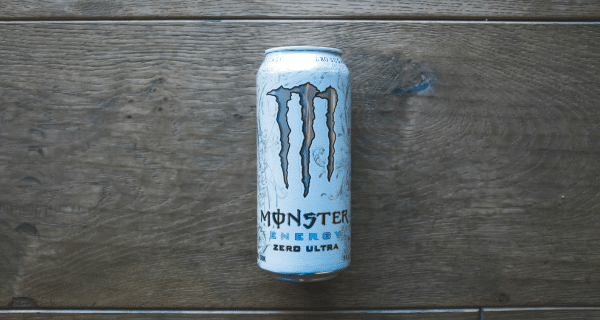
Hansen Beverage Company launched the Monster Energy drink in the United States in 2002, targeting 18–30‑year‑old males and sponsoring extreme sports, athletes and events. The product was sold in many countries and became a top‑selling energy drink worldwide. However, Monster Energy was not actually sold in Australia at the time; Australians could only access it informally, for example via eBay.
An Adelaide company, Bickfords, already had a strong local presence with cordials, soft drinks, water and juices. After visiting the US in 2005, Bickfords’ managing director was impressed by Monster Energy’s success and wanted to launch something similar in Australia. Trade mark searches showed the words MONSTER and MONSTER ENERGY were not registered here. Bickfords approached Hansen about a licence, but nothing came of it. Bickfords then developed its own energy drink using the names MONSTER and MONSTER ENERGY and filed trade mark applications for those names in Australia.
When Hansen discovered Bickfords’ product on Australian shelves, it sued in the Federal Court for misleading and deceptive conduct and passing off, arguing that Bickfords had copied Monster’s branding and overall “look and feel”. The similarities were clear:
- Both products were called MONSTER ENERGY.
- Both were sold in large black cans.
- Both had colour variants (orange, blue, green).
- Both used similar slogans and graphics.
Everyone accepted that the two products were close enough that consumers could be misled or confused. The key issue was different: had Monster Energy built enough reputation in Australia to stop a local competitor using that name and appearance?
- Hansen argued that it had a “spillover” reputation here from:
- Extreme sports events and sponsorships seen on TV, DVDs and online.
- Athletes (including Australians) wearing Monster‑branded gear.
- Online marketing and the Monster Energy website being accessible in Australia.
At first instance, the judge found this exposure was not enough. He described Hansen’s use of MONSTER ENERGY in Australia as “fleeting”, “occasional” and “incidental”. Although some Australians would have recognised the brand, Hansen could not show that a significant part of its target market here saw MONSTER ENERGY as indicating Hansen’s product. Without that level of reputation, Hansen could not make out passing off or misleading conduct.
On appeal, the Full Federal Court held that the trial judge had taken too narrow a view of whose awareness counted and sent parts of the case back to be reconsidered.
The broader point remains: foreign fame is not enough by itself.
To win against an Australian copy, an overseas brand must prove a sufficient reputation among Australian consumers at the relevant time.
Healthy Choice: same name, different country
A similar issue arose earlier in ConAgra Inc v McCain Foods (Aust) Pty Ltd, involving frozen meals.
ConAgra, a US company, had marketed HEALTHY CHOICE frozen dinners in the United States since 1989. Australian frozen food manufacturer McCain became aware of the brand, created its own Healthy Choice range for the Australian market, and applied to register HEALTHY CHOICE as a trade mark in Australia, where the name was available because ConAgra had not registered it here.
ConAgra sued McCain, alleging passing off and misleading and deceptive conduct.
It argued that using the same name and similar packaging would mislead consumers into thinking McCain’s products were connected with ConAgra’s Healthy Choice meals.
The Federal Court accepted that some people in Australia – such as returning travellers or migrants from the US – knew about ConAgra’s Healthy Choice products. However, ConAgra still had to show that there was a sufficiently substantial number of Australian consumers for whom HEALTHY CHOICE had acquired a “secondary meaning”, i.e. that the words meant ConAgra’s product rather than just describing healthy food.
On the evidence, the court was not satisfied that enough Australians associated HEALTHY CHOICE with ConAgra.
As a result, ConAgra’s claims failed and McCain was entitled to continue using the name Healthy Choice in Australia.
So, can you copy an overseas product and name in Australia?
These cases show that the answer is: sometimes yes, but with real risks. The key questions are:
Is the brand registered in Australia?
If the overseas owner has already registered its trade mark here (or applied for it), you cannot safely adopt the same or a confusingly similar name or logo. You may be infringing even if they have not started selling in Australia yet.
Does the overseas brand have a real reputation among Australian consumers?
Even without registration, a foreign brand may be able to stop you using its name or get‑up if enough people in Australia already know it and would be misled by your product. This is called “spillover reputation”. Evidence might include sales to Australian consumers, targeted online ads here, coverage in Australian media, or strong visibility in content watched by Australian audiences.
Is your product clearly “trading on” that reputation?
The more you copy the overall look and feel – product name, packaging, colours, slogans, graphics – the easier it is for an overseas brand with reputation here to argue that you are passing off your product
Is the name descriptive or invented?
Words like HEALTHY CHOICE are partly descriptive, which weakens the foreign owner’s position, especially without a strong Australian reputation. Highly distinctive or invented marks (like fanciful brand names or very unusual get‑up) are easier to protect.
Practical lessons for Australian food and beverage businesses
If you are tempted to copy an overseas concept, keep these points in mind:
- Do proper trade mark searches – Check the Australian Trade Mark Register for identical or similar marks in the relevant classes, and consider whether the brand may be well‑known here even without registration.
- Don’t assume “not sold here” means “free to use” – A foreign brand may still have enough spillover reputation in Australia to take action, particularly if it has been heavily advertised online, in media or via global sports sponsorship seen by Australians.
- Think about your own long‑term brand – Even if you can legally get away with copying a name or look now, it may not be a good strategy for building a strong, unique brand of your own. You may also later face pressure if the overseas brand enters Australia and starts to assert its rights.
- If you are the overseas brand – File trade marks in Australia as soon as you start seriously considering this market. Establish local presence and evidence of reputation early if you want to be able to stop look‑alikes.
- Always get tailored legal advice – Each situation turns on detailed facts about reputation, timing, marketing and the degree of similarity. A small change to your proposed name or packaging may dramatically reduce your legal risk.
Fun facts: Healthy Choice vs Healthy Choice
- Who used it first?
Healthy Choice started as a US frozen meal brand by ConAgra in 1989. - Who registered it here?
McCain, not ConAgra, applied to register HEALTHY CHOICE as a trade mark in Australia. - Was the name “free” in Australia?
Yes. ConAgra had never registered HEALTHY CHOICE here when McCain filed. - What did McCain do?
McCain launched its own Healthy Choice range for the Australian market using the same name. - What did the court say?
ConAgra’s US reputation wasn’t strong enough in Australia, so McCain was allowed to keep using HEALTHY CHOICE.
How we can assist you
We help food, beverage and FMCG businesses understand what they can safely borrow from overseas products and where the legal red lines are. We can:
- Conduct Australian and overseas trade mark searches for proposed brands.
- Advise whether an overseas brand is likely to have protectable reputation here.
- Help you choose and protect your own brand names, logos and packaging.
- Act for overseas brand owners concerned about Australian look‑alikes, or for Australian companies facing complaints from foreign rights holders.
Before you invest in copying or adapting an overseas product for the Australian market, it is worth getting advice. The cost of rebranding or being sued later can be far higher than the cost of doing it properly at the start.
Further Reading
“Can you replicate overseas products?” (original Food & Drink article)
https://sharongivoni.com.au/wp-content/uploads/2023/12/FD-MonsterDrink.pdf
“Trade marks: protecting your product and your reputation”
https://www.foodmag.com.au/trade-marks-protecting-your-product-and-your-reputation/
Hansen Beverage Company v Bickfords (Australia) Pty Ltd FCA 406 (Monster Energy case)
https://jade.io/summary/mnc/2008/FCA/406
ConAgra Inc v McCain Foods (Aust) Pty Ltd (Healthy Choice case)
https://www.ato.gov.au/law/view/print?DocID=JUD/*1992*FCA176/00001
Please note the above article is general in nature and does not constitute legal advice.
Please email us info@iplegal.com.au if you need legal advice about your brand or another legal matter in this area generally.