






Used under a Creative Commons Licence
Farmers See Red Over Purple Wax Tip – How Far One Woman Went
This is an updated version of an old post, click here to see the original.
A small branding idea with big impact
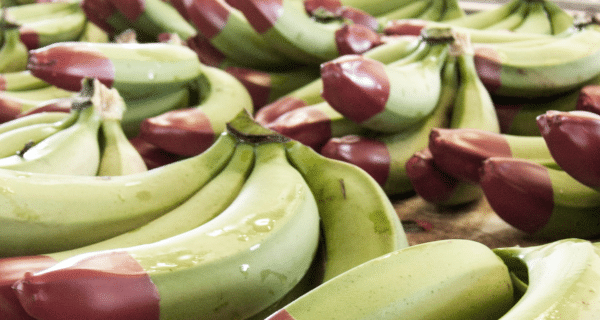
At first glance, a red wax tip on a banana sounds almost comical — like something a bored packer might dream up on a slow Tuesday — but for a Queensland farmer, that tiny flick of colour became the beating heart of a brand and a powerful lesson in trade mark protection. That simple red tip turned an ordinary piece of fruit into a standout product in the supermarket, proving that in a crowded market, even the smallest visual cue can shout the loudest when it is used consistently as part of a clear brand story.
The Eco Banana story: from farming to branding
More than a decade ago, banana growers Frank and Dianne Sciacca had a good problem: a product that was better than it looked, grown using an environmentally friendly system that produced sweeter, creamier fruit with a longer shelf life, but still visually indistinguishable from every other banana on the shelf. Higher costs and lower yields meant they couldn’t afford to blend into the background, so they needed a fast, visual shortcut that would tell their entire sustainability story in the time it takes a shopper to glance from one pile of fruit to another. Their solution was disarmingly simple — dip the end of each banana in red wax — instantly making the fruit look intentional, almost dressed up, and signalling that these were Pacific Coast Eco Bananas, grown sustainably and with care, rather than just another anonymous bunch.
What this teaches about trade marks
The legal lesson is straightforward: trade marks are not just words and logos for big corporations; they can be any signs that tell consumers “this comes from us”, including colours, shapes, patterns and specific visual features. Once a trade mark is properly registered for particular goods or services in Australia, others are not allowed to use the same sign or something confusingly similar in a way that could mislead customers about where those goods or services come from, which is why another wax‑tipped banana in the same market was a problem, even if the colour was technically different. In simple terms, a registered trade mark is like a reserved seat in your customer’s mind: you choose a name, logo, colour, shape or other distinctive sign, and if it is accepted and used consistently, the law allows you to keep that seat and stop others from sliding into it wearing a near‑identical outfit.
Branding takeaways for fashion, art and small business
For business owners — especially fashion designers, illustrators and makers — the Eco Banana story is a reminder to look closely at what truly makes your brand recognisable, whether it is a bold stripe on a garment, a particular shade on your packaging, a quirky swing tag shape or a recurring icon. If customers see that feature and think, “Oh, that’s you”, it may be more than a design flourish; it may be a brand asset that can be protected as a trade mark if you move early enough. Timing matters because waiting until a competitor copies you often leaves you with fewer options, whereas registering your trade mark early gives you a concrete legal anchor to point to when problems arise, making negotiations and enforcement clearer and, in many cases, more effective.
Trade marks as practical brand protection
Ultimately, trade marks turn the distinctive parts of your brand — like a signature print placement, recurring icon or colour combination — into legal property that you can rely on when someone edges too close, rather than just hoping that “fairness” or industry norms will protect you. The banana story shows that you do not need to be a global giant to use trade mark law effectively; you just need a distinctive sign, a bit of foresight and the willingness to treat your brand as an asset worth protecting, not an afterthought.
Further Reading
Can You Trade mark a Colour?
https://sharongivoni.com.au/its-not-easy-being-green/
Can You Trade Mark Stripes, Patterns or Colours in Fashion?
https://sharongivoni.com.au/protecting-stripes-as-trade-marks-adidas-did/
Louboutin Red Sole, Can It Be Trade marked?
https://sharongivoni.com.au/louboutin-red-sole-can-it-be-trade-marked/
How to Avoid Your Brand Becoming Generic
https://sharongivoni.com.au/how-to-avoid-your-brand-becoming-generic/
Mastering Brand Identity: Subbrands and Family Trade Marks
https://sharongivoni.com.au/creating-sub-brands-the-power-of-family-trade-marks/
Tips for readers: what to do next
- Audit your branding: colours, shapes, packaging, patterns
- Ask whether those features signal your business to customers
- Get advice before launching new designs
- Consider trade mark protection early
- Act promptly if you suspect copying
The Banana Brand Doing Things Differently
- The red wax tip banana is a registered trade mark owned by Pacific Coast Eco Bananas Pty Ltd
- All wax-tipped bananas are grown, supplied or authorised under licence by Pacific Coast Eco Bananas.
- Pink wax tip bananas are officially produced for breast cancer awareness events through the trade mark owner.
- Footy clubs and sporting organisations order licensed wax-tipped bananas in their team colours.
- Businesses use authorised wax-tipped bananas as edible merchandise instead of pens or tote bags.
- The same banana can be tipped in different colours only through the trade mark owner’s approval.
- Event organisers work directly with Pacific Coast Eco Bananas for custom colours and campaigns.
- The wax tip signals a licensed product, not a generic decoration.
- The trade mark allows collaboration without losing brand control.
- It’s a reminder that distinctive branding works best when it’s owned, protected and licensed properly.
Further Reading
IP Australia – What are trade marks?
https://www.ipaustralia.gov.au/trade-marks/what-are-trade-marks/
Please note the above article is general in nature and does not constitute legal advice.
Please email us info@iplegal.com.au if you need legal advice about your brand or another legal matter in this area generally.