





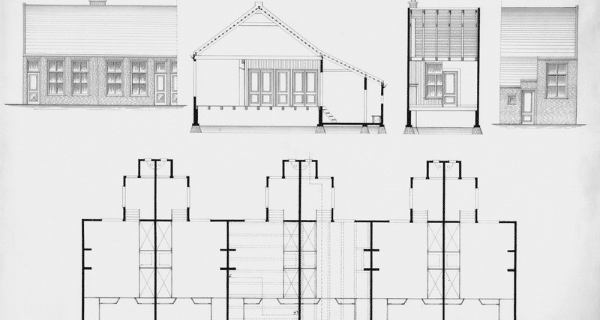

Photo by Amsterdam City Archieves from Unsplash
When buildings are altered, renovated or demolished, who gets the final say?
WHO SHOULD READ THIS?
This article is particularly relevant to:
- Architects and building designers concerned about changes to their original designs.
- Homeowners planning renovations to architect-designed properties.
- Property developers considering redevelopment or demolition.
- Builders and contractors modifying existing architectural plans.
- Owners of commercial buildings, heritage properties and public spaces.
- Interior designers, landscape architects and artists whose work forms part of a building.
You own the building. But can you do whatever you like with it?
Imagine spending a considerable amount of money engaging an architect to design your dream home. The house is completed, the architect has been paid, and you have moved in.
Five years later, you decide to renovate. Perhaps you want to remove a wall, replace the distinctive façade or completely redesign the interior. After all, it is your house.
Surely you can do whatever you like with it?
Not necessarily.
We regularly encounter confusion about the rights of architects, designers and property owners. One particularly misunderstood area concerns moral rights.
Many people are familiar with copyright, which protects certain economic rights in creative works. Far fewer realise that Australian law also recognises personal rights protecting the connection between a creator and their work.
These rights can remain with an architect even where the architectural firm owns the copyright, the client has paid for the design and the building itself has changed hands.
So what happens when an owner wants to alter, relocate or demolish a building? Can an architect object? Must the owner obtain permission? And what happens when the architect cannot be found?
In this second article in our architectural copyright series, we explore these questions and some interesting Australian and overseas cases.
As always, we explain the law in legal ease, not legalese®.
What exactly are moral rights?
Moral rights were introduced into Australian copyright law through the Copyright Amendment (Moral Rights) Act 2000 (Cth), with the principal provisions commencing on 21 December 2000.
They are now contained in Part IX of the Copyright Act 1968 (Cth).
Unlike the economic rights associated with copyright, moral rights protect an author’s personal relationship with their creative work.
For architects and designers, three rights are particularly important.
- The right to be recognised as the creator
Section 193(1) of the Copyright Act 1968 (Cth) establishes an author’s right of attribution of authorship.
Section 194 identifies the circumstances in which attribution is required, including certain reproductions, publications, exhibitions and communications of artistic works.
For example, an architect may have a right to be identified when their architectural drawings are reproduced in a publication or displayed in an exhibition, subject to the statutory requirements and exceptions.
This does not mean every building must carry a plaque naming its architect. The circumstances in which attribution is legally required, and what constitutes reasonable attribution, are important.
- The right not to have someone else falsely credited
Section 195AC establishes the right not to have authorship falsely attributed.
Sections 195AD to 195AH address particular forms of false attribution, including those relating to artistic works.
Imagine a developer publishing drawings of a building and incorrectly identifying another designer as the architect responsible for the original work.
Depending on the circumstances, that may raise moral rights concerns.
- The right to protect the integrity of the work
Section 195AI establishes an author’s right of integrity of authorship.
For artistic works, section 195AK defines derogatory treatment to include a material distortion, mutilation or alteration of the work that is prejudicial to the author’s honour or reputation, as well as certain other prejudicial acts.
This is particularly relevant to architecture.
An architect might object to substantial alterations that fundamentally change the appearance or character of a building and damage their professional reputation.
However, not every alteration amounts to derogatory treatment. The legal test is more demanding than simply showing that the architect dislikes the changes.
Copyright and moral rights: what’s the difference?
This distinction is important.
Copyright generally concerns economic rights, including reproduction of a protected work. Those rights can be licensed or assigned.
Moral rights concern personal authorship, attribution and integrity.
For example, an architectural practice might own copyright in drawings prepared by its employees. However, the individual architects who created those drawings may retain their moral rights.
Section 195AN of the Copyright Act 1968 (Cth) provides that an author’s moral rights are not transmissible by assignment, by will or by operation of law.
In other words, moral rights cannot simply be sold to someone else.
This can create a situation where a company owns copyright, a homeowner owns the building, and an individual architect retains moral rights in the relevant architectural work.
Three different interests may therefore exist in relation to the same project.
Can an architect stop a homeowner from renovating?
Not automatically.
An architect’s moral rights do not give them unlimited control over a building for the rest of its life.
Buildings are functional objects. They must be maintained, repaired, adapted and sometimes demolished. Owners may need to make changes for safety, accessibility, environmental performance or changing family circumstances.
Australian copyright law recognises this reality.
Section 195AS of the Copyright Act 1968 (Cth) provides that certain treatment of a work does not infringe the right of integrity where the treatment or other action was reasonable in all the circumstances.
The matters relevant to reasonableness include the nature of the work, its purpose, the circumstances in which it was created and relevant industry practices.
For example, changing a building to comply with safety requirements may be viewed differently from making unnecessary alterations that seriously damage the character of a distinctive architectural work.
The circumstances matter.
The special rules for altering or demolishing buildings
This is one of the most important parts of the legislation for architects, property owners and developers.
Section 195AT of the Copyright Act 1968 (Cth) contains special provisions concerning certain treatment of buildings and artistic works associated with buildings.
In particular, section 195AT(3) addresses changes to, relocation, demolition or destruction of buildings.
The provision recognises that building owners may need to make substantial changes, while also giving architects an opportunity to protect their professional and creative interests.
Broadly speaking, the statutory procedure may protect an owner from an infringement claim concerning the right of integrity where the owner has made reasonable inquiries but cannot identify or locate the relevant author or representative, or where the applicable notice requirements have been satisfied.
What does the notice procedure involve?
Section 195AT(3A) sets out requirements for written notice relating to buildings.
The process generally involves giving the relevant author or representative written notice before the proposed change, relocation, demolition or destruction.
The notice must explain the owner’s intentions and provide an opportunity for the author to request access to the building for specified purposes.
Importantly, the author has three weeks from the date of the notice to seek access to make a record of the work or consult in good faith about the proposed action.
Where a timely request is made, the owner must provide a reasonable opportunity for access within a further three-week period.
The relevant notice must also include prescribed information under regulation 126 of the Copyright Regulations 2017 (Cth).
This may include the building’s address, the owner’s details, information about the proposed changes and arrangements for access.
The process is more than a courtesy letter. It is a statutory mechanism with specific requirements.
Does the architect have a right to stop the demolition?
Generally, the notice procedure does not give an architect a right to prevent demolition.
Its purpose includes giving the architect an opportunity to document the work and consult about what is proposed.
An architect may wish to photograph the building, prepare a historical record or discuss whether certain distinctive features can be retained.
For a building owner, following the statutory procedure can be an important way of managing legal risk.
For an architect, receiving a notice should not be ignored. The opportunity to respond is time-sensitive.
What if the architect cannot be found?
This is a practical issue, particularly for older buildings.
An architect may have retired, moved overseas or died. The original architectural practice may no longer exist.
Section 195AT recognises that building owners cannot always locate the relevant author.
However, the owner must make reasonable inquiries.
What is reasonable will depend on the circumstances. Depending on the project, inquiries might involve reviewing original contracts and plans, contacting the architectural practice or professional representatives, and checking available project records.
An owner should keep evidence of the steps taken rather than simply assuming the architect is uncontactable.
Can architects consent to alterations in advance?
Yes, subject to statutory requirements.
Sections 195AW and 195AWA of the Copyright Act 1968 (Cth) address consent to acts or omissions that would otherwise infringe moral rights.
Consent must comply with the applicable statutory conditions. In particular, the legislation requires written consent dealing with specified acts or omissions, or specified classes or types of acts or omissions.
Section 195AWB also addresses the validity of consent, including circumstances involving duress or false or misleading statements.
For architects and developers, moral rights consent clauses are therefore an important part of contractual negotiations.
A developer may want sufficient flexibility to modify a building during construction or undertake future redevelopment.
An architect may want to ensure that consent is appropriately limited and does not expose their reputation to unnecessary harm.
A well-drafted clause should identify the relevant activities and provide practical certainty for both parties.
What have Australian courts said about moral rights?
Despite moral rights having existed in Australian law for more than two decades, relatively few reported decisions have considered them.
Two frequently discussed cases illustrate how seriously courts can take personal authorship rights.
Meskenas v ACP Publishing Pty Ltd [2006] FMCA 1136; (2006) 70 IPR 172
This case concerned a portrait published in Woman’s Day magazine.
The magazine incorrectly attributed the painting to another artist.
The Federal Magistrates Court found an infringement of the artist’s moral rights and awarded damages, including aggravated damages arising from the publisher’s conduct.
The case illustrates that false attribution can have consequences even where the dispute is not primarily about someone copying a work for financial gain.
For architects, the lesson is that identifying the correct creator matters.
Perez v Fernandez [2012] FMCA 2; (2012) 260 FLR 1
This case involved the American rapper Pitbull and a modified version of his song distributed by an Australian DJ.
The Federal Magistrates Court considered the right of integrity and awarded damages for infringement.
Although the dispute concerned music rather than architecture, it demonstrates that unauthorised changes to a creative work can raise moral rights issues where the statutory requirements are satisfied.
For architects, the underlying principle is relevant: ownership or possession of a work does not necessarily give someone unrestricted freedom to alter it in a manner prejudicial to the creator’s honour or reputation.
The Sydney Opera House: a famous example of architectural controversy
Few Australian buildings illustrate the personal relationship between architect and creation more vividly than the Sydney Opera House.
Danish architect Jørn Utzon won the international design competition in 1957, but left the project in 1966 following disputes about the building’s construction and administration.
Other architects subsequently completed significant aspects of the interior.
The controversy is often discussed in connection with architectural authorship, integrity and the treatment of an architect’s original vision.
However, Australia’s statutory moral rights regime did not exist at the time.
The Opera House therefore provides a historical illustration of the issues that moral rights seek to address, rather than an Australian judicial precedent establishing infringement.
It raises a fascinating question: how should society balance the architect’s creative vision against the practical and commercial needs of a building that may stand for generations?
Overseas cases: when artistic integrity becomes a legal dispute
Although overseas decisions do not determine the application of Australian law, they provide interesting illustrations of how different legal systems approach moral rights.
Snow v Eaton Centre Ltd (1982) 70 CPR (2d) 105 – Canada
Canadian artist Michael Snow created a sculpture featuring flying geese displayed in Toronto’s Eaton Centre.
During Christmas, the shopping centre placed decorative ribbons around the geese.
Snow objected, arguing that the decorations interfered with the integrity of his work.
The court granted relief requiring the ribbons to be removed.
The case has become a well-known illustration of how seemingly harmless alterations can raise questions about artistic integrity.
Castillo v G&M Realty LP 950 F 3d 155 (2d Cir 2020) – United States
This case concerned the famous 5Pointz graffiti site in New York.
A property developer painted over numerous works of street art before the buildings were demolished.
The artists brought proceedings under the United States Visual Artists Rights Act.
The courts upheld a substantial damages award, totalling US$6.75 million, arising from the destruction of 45 protected works.
The decision highlights the potential conflict between ownership of physical property and the personal rights of artists whose work is displayed on it.
Australian law approaches these issues differently, particularly because of the special statutory provisions dealing with buildings.
Nevertheless, the case demonstrates why building owners should not assume that ownership of a physical structure resolves every intellectual property issue associated with it.
What happens if moral rights are infringed?
Section 195AZA of the Copyright Act 1968 (Cth) provides remedies for infringement of moral rights.
Depending on the circumstances, a court may grant an injunction, award damages, make a declaration, order a public apology or order the removal or reversal of false attribution or derogatory treatment.
Section 195AZB sets out matters relevant to the assessment of damages.
Unlike an ordinary commercial copyright claim, the focus may include harm to the creator’s personal and professional interests.
However, litigation can be expensive, and the outcome will depend on the evidence, the nature of the alleged infringement and any applicable consent or statutory exception.
Five practical lessons for architects and building owners
For architects, moral rights should be considered when negotiating design contracts, particularly where clients may later wish to modify or redevelop a property. Architects should also retain records of their designs and clarify how they wish to be credited when their work is reproduced or publicised.
For building owners, purchasing a property does not necessarily extinguish the creator’s moral rights. Before undertaking significant alterations or demolition, it may be sensible to identify the original architect and determine whether the statutory notice procedure is relevant.
Developers should also consider whether a building contains separate artworks, sculptures or installations with their own rights holders.
Importantly, both sides should understand the distinction between a copyright assignment and a moral rights consent. They are not interchangeable.
Finally, clear communication can often avoid disputes. An architect may be less concerned about a proposed alteration if given an opportunity to understand the reasons for it, document the original work or discuss possible alternatives.
How we can help
At IPLEGAL, we assist architects, building designers, property developers, builders and homeowners with copyright, moral rights, contracts and disputes.
Whether you are an architect concerned about changes to your work, a developer planning renovations or a homeowner unsure about your rights, obtaining advice early can help avoid unnecessary disputes.
We can assist with moral rights consents, contractual provisions, statutory notices and questions concerning the use or alteration of architectural designs.
And, as always, we explain the law in legal ease, not legalese®.
Further Reading
These are relevant articles on your firm’s website. I’ve included the full titles and direct links where verified.
What Are Moral Rights and How Do They Apply in Practice?
https://sharongivoni.com.au/what-are-moral-rights-and-how-do-they-apply-in-practice/
Moral Rights and Copyright
https://sharongivoni.com.au/moral-rights-and-copyright/
Street Art: Another Brick in the Copyright Wall
https://sharongivoni.com.au/wp-content/uploads/2024/11/2013-StreetArtCopyrightWall.pdf
What Artists Can Do When Work Is Altered or Destroyed
https://sharongivoni.com.au/insights/
Please note the above article is general in nature and does not constitute legal advice.
Please email us info@iplegal.com.au if you need legal advice about your brand or another legal matter in this area generally.