






Getting ownership right before you file
Registering a trade mark can look deceptively simple.
Pick the mark, choose the goods and services, put the owner’s name on the application and file it. But getting any of those things wrong can create problems that only emerge years later – sometimes when the business is trying to stop a competitor from using its brand. One of the most important questions a trade mark lawyer should ask before filing is surprisingly basic: who actually owns the trade mark?
This matters because Australian trade mark law is not simply a system where whoever gets to IP Australia first automatically becomes the owner. The Trade Marks Act 1995 (Cth) contains specific requirements about who can apply, what they must intend to do with the mark and the grounds on which an application or registration can later be challenged. Sections 27, 58 and 59 are particularly important. A lawyer advising before filing should therefore look beyond the application form and examine the history of the brand itself.
WHO DOES THIS APPLY TO?
This issue can arise for start-ups, established businesses, family businesses, franchises and international corporate groups. It is particularly important where a founder created the brand personally, one company owns the intellectual property but another operates the business, or an overseas parent assumes that it should automatically own the Australian trade mark. It can also arise following restructures, business sales and changes in corporate structure.
The problem is that commercial control and legal ownership are not necessarily the same thing.
Who can apply for an Australian trade mark?
Section 27 of the Trade Marks Act 1995 (Cth) sets out who may apply to register a trade mark. Among other things, the applicant must claim to be the owner and must be using, or intend to use, the trade mark, or intend to authorise another person to use it, in relation to the relevant goods or services.
Where a mark has already been used, determining ownership can require investigating who first used it in Australia in relation to the relevant goods or services. Where there has been no prior use, questions of authorship, adoption and intention to use or authorise use can become important.
This is why simply saying, “Our parent company owns all our IP”, may not answer the legal question.

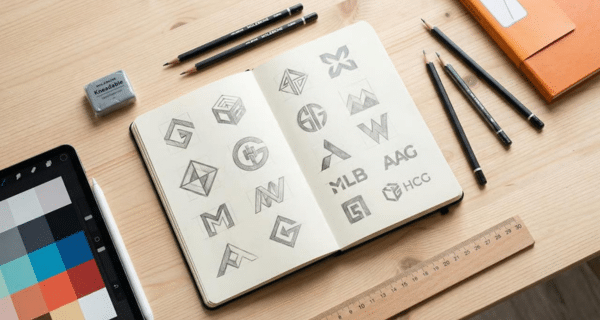
Your brand is valuable. Make sure you actually own it | Photo by Andy Brwon (unsplash)
The trap for founders: Pham Global
The Full Federal Court’s decision in Pham Global Pty Ltd v Insight Clinical Imaging Pty Ltd [2017] FCAFC 83 provides a powerful example.
Mr Pham was the sole director of a radiology company. An application was made in his personal name for an INSIGHT RADIOLOGY logo, even though the business using the mark was conducted by the company.
That might sound like a technical distinction. After all, Mr Pham controlled the company.
Legally, however, the distinction mattered enormously.
The Full Federal Court found that Mr Pham was not the owner of the trade mark when the application was filed. He was not the author of the mark, because the company was. Nor did he intend to use the mark himself or authorise the company to use it; it was always intended that the company would use the mark as its own. The fact that he was the company’s sole director and controlling mind did not make the company and Mr Pham the same legal person.
“We’ll transfer it later” may not solve the problem
Perhaps the most important aspect of Pham Global for businesses is what happened next.
Mr Pham subsequently purported to assign the trade mark application to the company. That assignment had initially saved the application: the trial judge had held that ownership could be satisfied at any time while the application was pending.
The Full Federal Court disagreed. It held that ownership must exist when the application is filed, and that earlier authorities suggesting otherwise were “plainly wrong”. A subsequent transaction could not retrospectively cure the fact that the original applicant was not the owner when the application was made. The decision changed how trade mark practitioners approach ownership problems.
There was another obvious problem: if Mr Pham did not own the trade mark in the first place, he could not transfer ownership he did not have.
This is precisely the sort of issue that can be avoided by getting the ownership analysis right before filing.
Trade marks law
Section 58 of the Trade Marks Act provides a ground for opposing registration where the applicant is not the owner of the trade mark.
Section 59 addresses a different issue. Registration may be opposed where the applicant did not intend to use the trade mark, authorise its use or assign it to a body corporate for use by that body.
Those provisions demonstrate why the identity of the applicant and the intended commercial arrangements surrounding the mark need to be considered together.
For example, if Company A applies for a mark but Company B will actually operate the business, a lawyer should ask why Company A is the applicant, what the relationship between the companies is and on what basis Company B will use the mark.

A great brand starts with creativity. A protected brand starts with legal advice.
If a trade mark is registered does that fix things?
It is a common misconception that once a trade mark is registered, any ownership problem has been “washed out” by the registration process. It has not.
Under section 88 of the Trade Marks Act, a registration can be cancelled on any of the grounds on which it could have been opposed, including that the applicant was not the owner.
An ownership defect can also be raised defensively: a defendant accused of infringement may rely on the defect in ownership as a defence.
In other words, the problem can sit quietly on the register for years and only surface when the business most needs its registration to work.
The same problem can arise across corporate groups
A structure may make commercial sense globally, but it does not remove the need to consider who is entitled to claim ownership under Australian trade mark law.
Likewise, a founder should not automatically file personally because they own the company.
The correct applicant should be determined from the actual facts rather than the organisation chart.
What if you’ve already filed in the wrong name?
In our experience, this problem is usually discovered by accident – during a business sale, a due diligence exercise, a restructure or when a cease and desist letter is being prepared.
The natural instinct is to fix it with a quick assignment.
As Pham Global shows, that will not work.
This is where obtaining advice before filing can save considerable difficulty later.
A trade mark lawyer can look at who created the brand, who first used it, who is using it now and which entity intends to use it in the future. We can also examine licences, assignments, company structures and agreements between related entities to make sure that the legal arrangements match what is happening commercially.
At Sharon Givoni Consulting, we do much more than simply lodge trade mark forms.
We can help identify the correct owner, conduct and assess searches, advise on registrability and potential conflicts, draft the specification of goods and services, consider the appropriate filing strategy and deal with objections or oppositions that may arise.
We can also look at how your trade marks fit with your broader business arrangements – including licences, distribution agreements, corporate structures, brand collaborations and intellectual property ownership.
The idea is simple: deal with these questions at the beginning so you don’t have to worry about them when something goes wrong.
FUN FACTS: TRADE MARK OWNERSHIP
- Australia’s first trade mark. The first Commonwealth Trade Marks Act commenced on 2 July 1906.
- “Registration of ownership, not ownership by registration”. That is how Australian courts have described the system
- Your business name can’t own your trade mark. Sparkly Windows, as a business name, can’t apply for a trade mark, but its owner, John Doe, can.
- Trusts can’t own trade marks either. A trust is not a legal entity, so it cannot own a trade mark.
- Recording a transfer isn’t the transfer. IP Australia warns against thinking that recording an assignment on the register is what transfers ownership
Further Reading
Pham Global Pty Ltd v Insight Clinical Imaging Pty Ltd [2017] FCAFC 83 (full judgment, WIPO Lex)
https://www.wipo.int/wipolex/zh/text/583419
IP Australia, “How to apply for a trade mark”
https://ipaustralia.gov.au/trade-marks/how-to-apply-for-a-trade-mark
IP Australia, “How to assign ownership of a trade mark”
https://ipaustralia.gov.au/manage-my-ip/how-to-update-my-ip-right-details/how-to-assign-ownership-of-a-trade-mark
Sharon Givoni, “Why Registering a Business Name Does Not Protect Your Brand”
https://sharongivoni.com.au/why-registering-a-business-name-does-not-protect-your-brand/
Sharon Givoni, “Barbie and Brand Control: The Power of Licensing and Trade Mark Protection”
https://sharongivoni.com.au/barbie-and-brand-control-the-power-of-licensing-and-trade-mark-protection/
Sharon Givoni, “Same same but different – when you choose the same brand as someone else’s”
https://sharongivoni.com.au/same-same-but-different/
Please note the above article is general in nature and does not constitute legal advice.
Please email us info@iplegal.com.au if you need legal advice about your brand or another legal matter in this area generally.