





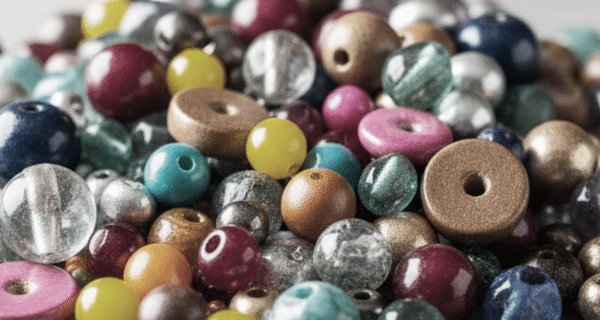

Used under a Creative Commons Licence
Threading IP Law together for Beaders
This is an updated version of an old post, click here to see the original.
How Australian Beaders and Jewellery Makers Can Protect Their Work, Brand and Business
There has never been a better time to be a jewellery maker, beader or creative business owner working with beautiful, tangible objects. Handmade beaded necklaces, wire‑wrapped rings, resin earrings, polymer clay beads, silver pieces and mixed‑media jewellery are thriving, both at markets and online. Customers are actively looking for originality, story and craftsmanship. But as your beading and jewellery designs become more visible — on Instagram, TikTok, Etsy and global marketplaces — they also become easier to copy, remix and resell without permission.
A common misconception in this space is: “My jewellery business is tiny, so the law doesn’t really apply to me yet.” In reality, Australian intellectual property law can be most valuable at the early stages, when your signature bracelet, earring style or bead pattern is just starting to take off. Understanding how copyright, trade marks and brand protection fit together can be the difference between building a recognisable jewellery label — and watching your ideas quietly walk away.
This guide explains briefly how the law “threads together” for beaders, jewellers and other hands‑on creatives in Australia.
Copyright protection for jewellery, beading and creative designs
One of the most empowering aspects of Australian law for makers is that copyright protection is automatic. As soon as you create an original artistic work — such as a jewellery design sketch, a unique beading pattern, an illustration for your packaging, a sculpted pendant, or a layout for a lookbook — copyright exists without any registration or form to fill in.
Copyright protects the expression of your idea, not the vague concept behind it. Your specific necklace design, your exact bead arrangement, your illustrated motif or your photographed earring display can be protected as an artistic work. Someone else can be “inspired by” beaded jewellery generally, but they are not free to copy your particular design, drawing, photo or pattern line‑for‑line.
Australian law also recognises certain works of artistic craftsmanship, which is important for jewellery and beadwork that sits between art and functional object. Carefully designed, skilfully made and visually distinctive pieces — for example, a hand‑fabricated silver pendant or an intricate, original bead‑woven cuff — may qualify as works of artistic craftsmanship if they reflect real creative skill and artistic quality. That said, copyright has limits: it does not protect your brand name or logo, and it will not always stop someone whose jewellery looks “too similar” unless copying can be shown. That is where trade marks become critical.
Trade marks for jewellery brands, logos and signature looks
If copyright protects what you create, trade marks protect who it is from. A trade mark can be your jewellery brand name, logo, swing‑tag symbol, slogan, distinctive packaging colour, or even a repeat visual element you consistently use in connection with your products.
Many beaders and jewellers start with an Instagram handle, Etsy shop name or market stall banner and assume that using it first is enough. Unfortunately, just using a name does not automatically give you strong, enforceable rights across Australia. Registering a trade mark can give you nationwide exclusive rights for your brand in your category (for example, jewellery, fashion accessories, online retail).
This becomes crucial when someone:
- launches a jewellery brand with a confusingly similar name to yours
- mimics your logo, tag line or the “look and feel” of your branding
- uses a name that makes customers think they might be associated with you
Copyright will not always help in those situations, because a name or simple logo may not qualify as an “artistic work” in the same way a detailed drawing does. Trade marks are designed specifically to deal with brand identity and customer confusion.
Why beaders and jewellers often need both
You don’t have to choose between copyright and trade marks; in practice, they work best together.
Your beading patterns, jewellery designs, product photos and illustrations are covered by copyright as artistic works, giving you tools to act when someone directly copies them.
Your brand name, logo, tag line and possibly distinctive packaging or colour scheme can be protected with a trade mark registration, giving you a clearer right to stop look‑alike brands.
For example, a beader who designs a unique floral choker pattern may rely on copyright to stop another maker from copying the exact pattern chart or photos. At the same time, they might register the brand name under which they sell their jewellery, so that no one else can easily launch a similar‑sounding label and trade off the reputation they have built. These rights overlap, but they do different jobs and are most powerful when used strategically together.
Branding risks for jewellery and creative businesses
Branding can feel like pure creativity — choosing names, colours, fonts and imagery that express your style — which is exactly why legal risk often slips in unnoticed. Using names or visuals that “sound familiar” can cause problems if they:
- echo well‑known fashion or jewellery brands
- look or sound similar to existing registered trade marks
- suggest a connection to a designer, label or cause that is not actually involved
- borrow too closely from another maker’s logo, brand story or imagery
Australian law focuses on how consumers are likely to see things. If your beaded jewellery line uses a name, logo or colour scheme that might confuse customers about who made it or who endorses it, you may either be infringing someone else’s rights or, conversely, be at risk of others confusing your customers. In a fast‑moving creative world where trends and aesthetics spread rapidly online, being careful and original with your branding is just as important as being original with your jewellery designs.
Online selling: bigger audience, bigger need for protection
Selling jewellery and beadwork online through your own website, Etsy, Instagram, TikTok shops or global platforms gives huge reach — and huge exposure. Photos of your earrings, bracelets and necklaces can be copied in seconds, listings can be cloned, and your brand name can be adopted by others in different states or even countries.
This is why early legal protection matters:
Clear copyright ownership makes it easier to submit takedown notices when your product photos or pattern instructions are copied.
A registered Australian trade mark gives you a strong, recognised basis for challenging look‑alike brand names on platforms and with marketplaces.
Waiting until there is a serious copycat or brand dispute usually means higher cost and more stress. Building protection in from the start turns your brand into an asset rather than a liability.
Using your own name as a jewellery brand
Many jewellery and bead artists trade under their own name, especially when their reputation is personal — for example, “Jane Smith Jewellery” or “Emma Rose Beads”. This can be powerful because it ties your identity directly to your work.
Your name can function as a trade mark if it distinguishes your goods or services in the marketplace. Over time, customers associate that name with a particular style and quality. Without registration, however, enforcing those rights is harder, especially if others have similar names. Registering your name as a trade mark does not stop other people from having or using the same surname in everyday life; it helps prevent confusion in the specific context of jewellery and creative products, giving you clearer rights in your industry.
Final thoughts: giving structure to your creativity
Australian intellectual property law is not there to scare beaders, jewellers and creatives away from sharing their work; it exists to support originality, fairness and investment in creative practice. You do not need to protect everything at once, but you do need awareness and a basic plan: which designs are most important, which brand elements are truly distinctive, and where your biggest risks lie.
When used thoughtfully, copyright, trade marks and good branding practices do not stifle creativity — they protect it. They give you the confidence to showcase your beading and jewellery, collaborate, license designs and approach retailers, knowing that you are not handing your hard work to the world with no safety net. Your designs, your photos and your brand identity are all part of your creative voice. Giving them legal structure is simply another way of valuing that voice.
Threading the Law Together: Still Relevant for Creatives Today
If you work in jewellery, beading or handmade design, many of these legal issues are not new — but they are more important than ever. More than a decade ago, I explored these themes in an article called Threading the Law Together, originally published in Beading Magazine. That piece looked at how Australian copyright and trade mark law applies specifically to artisan and beading businesses, and why creatives need to understand the difference between protecting their work and protecting their brand.
While the platforms have changed since then, the core principles remain the same. Copyright in Australia still arises automatically when you create an original artistic work, including works of artistic craftsmanship such as handcrafted jewellery and intricate beading designs. Trade marks still play a crucial role in protecting brand names, logos and the goodwill built around a creative business — particularly where designers trade under their own name or a distinctive label.
If you’d like to read the original article in full, you can access it here:
Threading the Law Together – Beading & Jewellery Businesses
https://sharon.trilogywebsolutions.net/articles/2013-ThreadingTheLawTogether.pdf
https://www.jewellermagazine.com/Article/14574/Queensland-jeweller-charged-with-selling-fake-high-end-jewellery
https://www.lawyerly.com.au/kmart-target-accused-of-selling-knock-off-van-cleef-jewelry/
https://www.accc.gov.au/media-release/full-federal-court-confirms-false-or-misleading-representations-by-zamels
Further Reading
Legal Protection for Jewellery Designs — A practical guide by Sharon Givoni (via DesignWise, powered by Sharon Givoni Consulting) explaining how Australian law protects jewellery designs through copyright, registered designs and trade marks, and why legal strategy matters for makers.
https://sharongivoni.com.au/legal-protection-for-jewellery-designs/
How Can You Protect Jewellery Designs in Australia? (published as “Protecting Jewellery Designs in Australia”) — A Sharon Givoni article focused on the specific steps jewellery designers can take to secure design, copyright and trade mark protection and avoid common IP pitfalls.
https://sharongivoni.com.au/how-can-you-protect-jewellery-designs-in-australia/
Protecting Your Creative Business Ideas Legally – From LEGO to Logos — A broader Sharon Givoni piece on turning creative business concepts (including jewellery products and packaging ideas) into protectable legal assets under Australian IP law.
https://sharongivoni.com.au/protecting-your-creative-business-ideas-legally-from-lego-to-logos/
ACCC calls for fair trading in jewellery industry — An ACCC media release setting out fair trading expectations for the jewellery sector, including truthful advertising, gemstone descriptions and discount pricing claims.
https://www.accc.gov.au/media-release/accc-calls-for-fair-trading-in-jewellery-industry
One infringement to rule them all: Federal Court finds jewellery infringes copyright in Lord of the Rings — A Clayton Utz article on a Federal Court case where a Melbourne jeweller infringed copyright by reproducing J.R.R. Tolkien’s famous inscription on rings, showing how copyright can apply to jewellery elements.
https://www.mondaq.com/australia/copyright/529204/one-infringement-to-rule-them-all-federal-court-finds-jewellery-infringes-copyright-in-lord-of-the-rings
Please note the above article is general in nature and does not constitute legal advice.
Please email us info@iplegal.com.au if you need legal advice about your brand or another legal matter in this area generally.